|
Saturday, September 18,
2010
EFF-PFF Amicus Brief in Schwarzenegger v. EMA Supreme Court Videogame Violence Case
 By Berin Szoka & Adam Thierer By Berin Szoka & Adam Thierer
Yesterday, the Progress & Freedom Foundation (PFF) and Electronic Frontier Foundation (EFF) filed a joint amicus brief with the U.S. Supreme Court urging the Court to protect the free speech rights of videogame creators and users and asking the justices to uphold a ruling throwing out unconstitutional restrictions on violent videogames. At issue is a California law that bans the sale or rental of "violent" videogames to anyone under the age of 18, among other regulations. While the law was passed in 2005, it has never taken effect, as courts have repeatedly ruled it unconstitutional. California appealed its loss at the Ninth Circuit Court of Appeals to the Supreme Court. The case is Schwarzenegger vs. EMA.
This case has profound ramifications for the future of not just videogames, but all media, and the Internet as well. Although we've had 15 years of fairly solid Supreme Court case law on new media issues, a loss in the Schwarzenegger case could reverse that tide. In the amicus brief, we explain how the current videogame content rating system empowers parents to make their own decisions without unconstitutionally restricting this new and evolving form of free speech. Our brief is focused on three major arguments:
- Parental Control Tools, Household Media Control Methods, Self-Regulation and Enforcement of Existing Laws Constitute Less Restrictive Means of Limiting Access to Objectionable Content than Government Regulation of Constitutionally Protected Speech
- Videogame Content is Constitutionally Protected Speech Deserving Strict Scrutiny
- The State Has Not Established a Compelling Government Interest in Restricting the Sale of Videogames to Minors
The filing can be found online here and it is embedded down below. As always, the Media Coalition has done an outstanding job summarizing the case and listing all the major briefs filed with the Court in this matter, so check out their Schwarzenegger v. EMA page for everything you need to know about this case. GamePolitics.com also offers excellent ongoing coverage of the case. Continue reading EFF-PFF Amicus Brief in Schwarzenegger v. EMA Supreme Court Videogame Violence Case . . .
posted by Adam Thierer @ 12:44 PM |
Free Speech, Video Games & Virtual Worlds
Link to this Entry | Printer-Friendly | Email a Comment |Post a Comment (44)
Sunday, August 8,
2010
Net Neutrality & the First Amendment
There are few things I find more annoying in the Net neutrality wars than the silly assertion by groups like Free Press and other regulatory radicals that "Net neutrality is the Internet's First Amendment." It's utter rubbish as I have documented here many times before. But now Sen. Al Franken is running around sputtering such nonsense, as he did in this recent CNN.com editorial, claiming that "Net neutrality is foremost free speech issue of our time." The folks at CNN invited me to response and below you will find the piece PFF press director Mike Wendy and I submitted.
____________
"Big Government the Real Threat to Internet"
by Adam Thierer & Mike Wendy
In his recent CNN.com opinion piece, "Net neutrality is foremost free speech issue of our time," Sen. Al Franken claims that "our free speech rights are under assault -- not from the government but from corporations seeking to control the flow of information in America."
He alludes to potential corporate blocking of online products and speech and says, "If that scares you as much as it scares me, then you need to care about net neutrality."
Chicken Little, call your office!
Such sky-is-falling scare tactics are all too common in the heated debate over net neutrality regulation, but actual evidence of such nefarious corporate scheming is nowhere to be found. Perhaps that's why Franken resorts to such tall tales.
Moreover, his reading of the First Amendment is at odds with the one most of us learned about in civics class ("Congress shall make no law..."). His would empower regulators by converting the First Amendment from a shield against government action into a sword that bureaucrats could wield against private industry. Continue reading Net Neutrality & the First Amendment . . .
posted by Adam Thierer @ 8:46 PM |
Free Speech, Net Neutrality
Link to this Entry | Printer-Friendly | Email a Comment |Post a Comment (3)
Thursday, August 5,
2010
Pub Interest Groups Decry Sunlight - Say It's Corrupting FCC Net Neutrality Process
techdirt's hit kind of a new low in the divisive Net Neutrality debate. Mike Masnick writes that the telcos have got their Net Neutrality deal with the FCC because, well, they have some mighty deep pockets, and they're prepared to use them - either for-or-agin the Dems - come election season. Consequently, FCC Chairman Julius Genachowski had no choice but to back down from his Net Neutrality / Reclassification madness and give the big boys what they want.
C'mon, Mike! You make the National Enquirer blush.
The "reporting" follows the well worn meme espoused by the Left that when the going gets tough, and the deal looks like it ain't cutting their way - then blame the "monopolists" for corrupting the process. Good lord, get a new riff already.
Free Press, Public Knowledge, MAP and OIC lobbyists (among other "reformistas") have practically installed themselves at the FCC since day one (I think I saw their cots, bedrolls and toiletries there the other day). To claim that they've been left-out strains credulity (as this FCC blog reveals).
Let's see. They've gotten their lobbying dollar's worth out of the Open Internet / Net Neutrality NPRM; the National Broadband Plan; the Wireless Competition Report; the Third Way Statement; the Third Way NOI; the 706 Report; and have supped at the FCC table throughout the "closed-door" Net Neutrality meetings.
Compromise will happen. It should. This is a highly charged debate that has divided many. The FCC hasn't helped any by trying to avoid the will of Congress, end-running around key court decisions, and attempting to jam an innovation-killing rule down the throats of American broadband consumers.
Though I think the Commission is wrong to try to regulate the Internet through broadband Reclassification, I also recognize that some discussion - possibly one that reaches compromise - should occur.
What I do not think is helpful is the idea, seemingly shared by the public interest groups, that "it's our way or no way; and if you get in the way of that - then you're a corrupt SOB."
Mike, remember the elementary school admonition - "sticks and stones..."? I'll bet the network providers do, and it's helped them keep their eye on the ball to ensure that a reasoned ruling comes out of the FCC.
The opposite would be corrupt - a closed process decided by a small handful of elite, "consumer advocates," impervious to reason, debate or the sunlight of opposing viewpoints. Until this summer, it looked like it was going in this direction. Now, thankfully, the process appears to be more inclusive - one which may result in a more fair outcome for all involved. posted by Mike Wendy @ 8:12 AM |
Broadband, Capitol Hill, Communications, Free Speech, Innovation, Internet, Net Neutrality, Regulation, The FCC
Link to this Entry | Printer-Friendly | Email a Comment |Post a Comment (1)
Monday, July 26,
2010
Crovitz on the First Amendment, Parenting & "The Technology of Decency"
The always-excellent Wall Street Journal "Information Age" columnist L. Gordon Crovitz has another editorial worth reading today, which builds on the Second Circuit's recent decision to reverse FCC content regulation for broadcasting. In "The Technology of Decency," Crovitz explains "parents don't need the FCC to protect their children." "Technology makes it easier to block seven or any number of dirty words," he notes. "Taking the FCC out of regulating indecency might just lead to more decency by refocusing responsibility where it belongs: on broadcasters and parents."
That's a point I've hammered on her in the past and in all my work on parental empowerment solutions, including my book, "Parental Controls and Online Child Protection: A Survey of Tools and Methods." Indeed, there has never been a time in our nation's history when parents have had more tools and methods at their disposal to help them decide what is acceptable in their homes and in the lives of their children. And, luckily, poll after poll shows that parents are stepping up to the plate and taking on that responsibility (contrary to what some policymakers in Washington imply).
Moreover, legally speaking, Crovitz shows why the old rationales for regulating broadcasting differently no longer work. "No medium is likely ever to be as pervasive as broadcasting once was," he notes. He goes on to note that:
Continue reading Crovitz on the First Amendment, Parenting & "The Technology of Decency" . . .
posted by Adam Thierer @ 8:57 AM |
Free Speech
Link to this Entry | Printer-Friendly | Email a Comment |Post a Comment (5)
Friday, July 23,
2010
The Battle for Media Freedom: A Conflict of Cyber-Visions
Over at MediaFreedom.org, a new site devoted to fighting the fanaticism of radical anti-media freedom groups like Free Press and other "media reformistas," I've started rolling out a 5-part series of essays about "The Battle for Media Freedom." In Part 1 of the series, I defined what real media freedom is all about, and in Part 2 I discussed the rising "cyber-collectivist" threat to media freedom. In my latest installment, I offer an analytical framework that better explains the major differences between the antagonists in the battle over media freedom.
Understanding the Origins of Political Struggles
 In his many enlightening books, Thomas Sowell, a great economist and an even better political scientist, often warns of the triumph of good intentions over good economics. It's a theme that F.A. Hayek and Milton Friedman both developed extensively before him. But Sowell has taken this analysis to an entirely differently level in books like A Conflict of Visions: Ideological Origins of Political Struggles, and The Vision of the Anointed: Self-Congratulation as a Basis for Social Policy. Sowell teaches us that no matter how noble one's intentions might be, it does not mean that those ideas will translate into sound public policy. Nonetheless, since "the anointed" believe their own intentions are pure and their methods are sound, they see nothing wrong with substituting their will for the will of millions of individuals interacting spontaneously and voluntarily in the marketplace. The result is an expansion of the scope of public decision-making and a contraction of the scope of private, voluntary action. As a result, mandates replace markets, and freedom gives way central planning. In his many enlightening books, Thomas Sowell, a great economist and an even better political scientist, often warns of the triumph of good intentions over good economics. It's a theme that F.A. Hayek and Milton Friedman both developed extensively before him. But Sowell has taken this analysis to an entirely differently level in books like A Conflict of Visions: Ideological Origins of Political Struggles, and The Vision of the Anointed: Self-Congratulation as a Basis for Social Policy. Sowell teaches us that no matter how noble one's intentions might be, it does not mean that those ideas will translate into sound public policy. Nonetheless, since "the anointed" believe their own intentions are pure and their methods are sound, they see nothing wrong with substituting their will for the will of millions of individuals interacting spontaneously and voluntarily in the marketplace. The result is an expansion of the scope of public decision-making and a contraction of the scope of private, voluntary action. As a result, mandates replace markets, and freedom gives way central planning.
Sowell developed two useful paradigms to help us better understand "the origins of political struggles." He refers to the "constrained" versus "unconstrained" vision and separates these two camps according to how they view the nature of man, society, economy, and politics:
| "Constrained Vision" |
"Unconstrained Vision" |
| Man is inherently constrained; highly fallible and imperfect |
Man is inherently unconstrained; just a matter of trying hard enough; man & society are perfectible |
| Social and economic order develops in bottom-up, spontaneous fashion. Top down planning is hard because planners aren't omnipotent. |
Order derives from smart planning, often from top-down. Elites can be trusted to make smart social & economic interventions. |
| Trade-offs & incentives matter most; wary of unintended consequences |
Solutions & intentions matter most; less concern about costs or consequences of action |
| Opportunities count more than end results; procedural fairness is key; Liberty trumps |
Outcomes matter most; distributive or "patterned" justice is key; Equality trumps liberty |
| Prudence and patience are virtues. There are limits to human reason. |
Passion for, and pursuit of, high ideals trumps all. Human reason has boundless potential. |
| Law evolves and is based on the experience of ages. |
Law is made by trusted elites. |
| Markets offer benefit of experience & experimentation and help develop knowledge over time. |
Markets cannot ensure desired results; must be superseded by planning & patterned justice |
| Exponents: Aristotle, Adam Smith, Edmund Burke, James Madison, Lord Acton, F.A. Hayek, Ludwig von Mises, Milton Friedman, James Buchanan, Robert Nozick |
Exponents: Plato, Rousseau, William Godwin, Voltaire, Robert Owen, John Kenneth Galbraith, John Dewey, Earl Warren, Bertrand Russell, John Rawls |
Continue reading The Battle for Media Freedom: A Conflict of Cyber-Visions . . .
posted by Adam Thierer @ 9:58 AM |
Books & Book Reviews, Free Speech, Mass Media, Media Regulation
Link to this Entry | Printer-Friendly | Email a Comment |Post a Comment (0)
Monday, July 19,
2010
New York Times Symposium on Future of Indecency Regulation
As part of its excellent "Room for Debate" series, the New York Times has an interesting new online symposium up now asking, "Will Networks Go Wild, With No Decency Rules?" It was in response to last week's Second Circuit decision, which again slapped down an effort by the Federal Communications Commission to defend the agency's indecency enforcement regime. I was honored to be asked to contribute a short essay on the subject. Here are the other contributors and their essays. Take the time to check them out:
I was particularly interested in former FCC's Chairman Michael Powell's admission that "The [FCC's] fleeting expletive policy was a mistake," and that "the real problem is the now-flawed constitutional foundation on which the law is built." Powell goes on to argue that, "We cannot have one First Amendment for broadcasting and another one for every other medium. This vestige of a bygone era provides fertile ground for mischief -- culture wars, political agenda and moral mandates. It's high time for the high court to bring our laws into the 21st century."
I wholeheartedly agree, and I wrote a lengthy law review article on just that topic back in 2007 entitled,"Why Regulate Broadcasting: Toward a Consistent First Amendment Standard for the Information Age." If you find it too boring, just watch this video I made summarizing the key points, which I called "America's First Amendment Twilight Zone." posted by Adam Thierer @ 3:03 PM |
Free Speech
Link to this Entry | Printer-Friendly | Email a Comment |Post a Comment (1)
Wednesday, July 14,
2010
Second Circuit: Pacifica Is Outdated, All Media Deserve Full First Amendment Protection
The Second Circuit just threw out the FCC's broadcast indecency rules--which had led to heavy fines for "fleeting expletives"--as "unconstitutionally vague, creating a chilling effect that goes far beyond the fleeting expletives at issue here." What's ultimately most important about this decision is not what the court did, but what it said: The Constitutional framework that has allowed broadcast censorship has been rendered obsolete by the rise of the Internet and parental empowerment tools for new and old media.
In short, the court utterly rejected the Supreme Court's 1978 Pacifica decision--which gave the FCC great discretion in regulating indecency on broadcast radio and television in order to protect children who might be in the audience during daytime and early evening hours, citing the unique "pervasiveness" and "invasiveness" of broadcasting into the home. The court fully embraced what we've been saying for years--neither rationale holds true anymore:
we face a media landscape that would have been almost unrecognizable in 1978. Cable television was still in its infancy. The Internet was a project run out of the Department of Defense with several hundred users. Not only did Youtube, Facebook,and Twitter not exist, but their founders were either still in diapers or not yet conceived. In this environment, broadcast television undoubtedly possessed a "uniquely pervasive presence in thelives of all Americans."
The same cannot be said today. The past thirty years has seen an explosion of media sources, and broadcast television has become only one voice in the chorus. Cable television is almost as pervasive as broadcast.... The internet, too, has become omnipresent, offering access to everything from viral videos to feature films and, yes, even broadcast television programs.... Moreover, technological changes have given parents the ability to decide which programs they will permit their children to watch. (15-16)
Thus, the Second Circuit all but begged the Supreme Court to throw out Pacifica completely, but quickly noted that it is "bound by Supreme Court precedent, regardless of whether it reflects today's realities" (17). Fortunately, the court was able to reach the same result on vagueness grounds. It's worth reading this key passage to see what a consistent approach to the First Amendment would look like: Continue reading Second Circuit: Pacifica Is Outdated, All Media Deserve Full First Amendment Protection . . .
posted by Berin Szoka @ 10:48 AM |
Free Speech
Link to this Entry | Printer-Friendly | Email a Comment |Post a Comment (1)
Is a Massive Taxpayer-Funded Propaganda Machine Really a Good Idea?
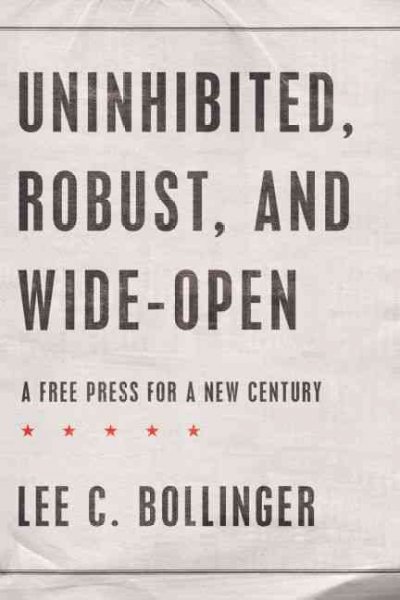
 Earlier this year, while I was preparing this mega-filing to the Federal Communications Commission in its "Future of Media" proceeding, I read Uninhibited, Robust, and Wide-open: A Free Press for a New Century, by Lee C. Bollinger, who is the president of Columbia University. I had planned on reviewing it since I try to review almost every book I read, but it was hard for me to believe that anyone would take this book too seriously, so I just moved along. Earlier this year, while I was preparing this mega-filing to the Federal Communications Commission in its "Future of Media" proceeding, I read Uninhibited, Robust, and Wide-open: A Free Press for a New Century, by Lee C. Bollinger, who is the president of Columbia University. I had planned on reviewing it since I try to review almost every book I read, but it was hard for me to believe that anyone would take this book too seriously, so I just moved along.
I hate to be that dismissive of any text but this is a book, after all, that proposes the creation of a massive U.S. propaganda machine. Bollinger doesn't just want our government to help out a bit at the margins like it currently does; he wants the State to get under the covers, cuddle tight and become intimate lovers with the Press. And then he wants the Big Press to project itself more, especially overseas, to compete with other State-owned or subsidized media enterprises. Again, it's a propaganda machine, pure and simple. In a new Wall Street Journal editorial today entitled, "Journalism Needs Government Help," he argues:
To me a key priority is to strengthen our public broadcasting role in the global arena. In today's rapidly globalizing and interconnected world, other countries are developing a strong media presence. In addition to the BBC, there is China's CCTV and Xinhua news, as well as Qatar's Al Jazeera. The U.S. government's international broadcasters, like Voice of America and Radio Free Europe, were developed during the Cold War as tools of our anticommunist foreign policy. In a sign of how anachronistic our system is in a digital age, these broadcasters are legally forbidden from airing within the U.S. This system needs to be revised and its resources consolidated and augmented with those of NPR and PBS to create an American World Service that can compete with the BBC and other global broadcasters.
China's CCTV and Xinhua news? Qatar's Al Jazeera? Really?! As Jeff Jarvis rightly asks in his terrific response essay, " No American BBC,": "In what sane world is the Chinese government's relationship with news a model?" Indeed, this is frightening stuff. Has Bollinger not studied the Chinese system of state media meddling? Needless to say, it's not pretty. And while I would agree that the BBC model shows that some State-funded media can be quite impressive and free of most meddling, that's not been the case across the board. Continue reading Is a Massive Taxpayer-Funded Propaganda Machine Really a Good Idea? . . .
posted by Adam Thierer @ 10:37 AM |
Books & Book Reviews, Free Speech, Mass Media, Media Regulation, What We're Reading
Link to this Entry | Printer-Friendly | Email a Comment |Post a Comment (2)
Monday, July 12,
2010
If We Ban Violent Video Games, Why Not Violent Theme Park Attractions?
 I'm hoping to get some input from readers as I look to finish up an amicus brief for the forthcoming Schwarzenegger v. EMA video game case. (Respondent briefs are due in mid-Sept and the State of California just filed its brief with the Court today). You will recall that the Supreme Court accepted the case for review in April, meaning it will be the first major case regarding video game speech rights heard by our nation's highest court. It raises questions about the First Amendment status of games and what rights minors have to buy or play "violent" video games. One section I hope to include in the brief I'm working on deals with how other forms of media content are increasingly intertwined with video game content. In it, I explain how video games are less of a discreet category of visual entertainment than they once were. I'd welcome ideas for other examples to use relative to the ones you see below. I'm hoping to get some input from readers as I look to finish up an amicus brief for the forthcoming Schwarzenegger v. EMA video game case. (Respondent briefs are due in mid-Sept and the State of California just filed its brief with the Court today). You will recall that the Supreme Court accepted the case for review in April, meaning it will be the first major case regarding video game speech rights heard by our nation's highest court. It raises questions about the First Amendment status of games and what rights minors have to buy or play "violent" video games. One section I hope to include in the brief I'm working on deals with how other forms of media content are increasingly intertwined with video game content. In it, I explain how video games are less of a discreet category of visual entertainment than they once were. I'd welcome ideas for other examples to use relative to the ones you see below.
I begin by discussing games that were inspired by major motion pictures, such as both the recent Star Wars and Lord of the Rings movie trilogies, for example. I also note that many games were inspired by notable books, such as the LotR games being inspired by Tolkien, and The Godfather video games that were inspired by Mario Puzo's novel of the same name. I also make mention of The Terminator movies starring California Governor Arnold Schwarzenegger, which inspired a wide variety of video games, many of which featured his likeness.
More importantly, I highlight how many video games are now inspiring movies, music, books, and comics, including: Prince of Persia, Max Payne, Resident Evil, Tomb Raider, Doom, Final Fantasy, Halo, and Gears of War. The characters and storylines in the books, comics, and movies based on these games often closely track the video games that inspired them. Increasingly, therefore, games are developed along parallel tracks with these other forms of content. Thus, to regulate games under the standard California proposes in this case raises the question of whether those other types of media should be regulated in a similar fashion. Should every iteration of the original game title be regulated under the standard California has suggested if those books, comics, or movies contain violent themes? Continue reading If We Ban Violent Video Games, Why Not Violent Theme Park Attractions? . . .
posted by Adam Thierer @ 7:31 PM |
Free Speech, Supreme Court, Video Games & Virtual Worlds
Link to this Entry | Printer-Friendly | Email a Comment |Post a Comment (4)
Tuesday, July 6,
2010
Don't Like Apple's "Censorship" of Apps Content? Use Your iPhone or iPad Browser!
NY venture capitalist Fred Wilson notes eight advantages of using the iPhone's Safari browser over iPhone apps to access content. Fred's arguments seem pretty sound to me and help to illustrate the point I was trying to make a few months ago in a heated exchange over Adam's post on Apple's App Store, Porn & "Censorship": Although Apple restricts pornographic apps, it does not restrict what iPhone (or iPad or iTouch) users can access on their browsers. (And it's not censorship, anyway, because that's what governments do!)
As I noted in that exchange, the main practical advantage of apps right now over the browser seems to be the ability to play videos from websites that require Flash--which is especially useful for porn! Apple has rejected using Flash on the iPhone on technical grounds, in favor of HTML5, which will allow websites to display video without Flash--including on mobile devices. But once HTML5 is implemented (large scale adoption expected in 2012), this primary advantage of apps over mobile Safari will disappear: Users will be able to view porn on their browsers without needing to rely on apps--and Apple's control over apps based on their content will no longer matter so much, if at all.
Of course, it may take several more years for HTML5 to really become the standard, but what matters is that all Apple products, including mobile Safari, already support HTML5. So it's just a question of when porn sites move from Flash to HTML5. That seems already to be happening, with major porn publishers already starting the transition. The main stumbling block seems to be HTML5 support from the other browser makers. But Internet Explorer 9 supports HTML5, and is expected out early in 2011 with a beta version due out this August. Mozilla's Firefox 4.0 (formerly 3.7) also promises HTML5 support and is due out this November. Since porn publishers have always been on the cutting edge of implementing new web technologies, I'd bet we'll start seeing many porn sites move to HTML5 by this Christmas. And by Christmas 2011, as we all sit around the fire with Grandma sipping eggnog and enjoying our favorite adult websites on our overpriced-but-elegant Apple products loading in HTML5 in the Safari browser, we'll all look back and wonder why anyone made such a big deal about Apple restricting porn apps.
Oh, and if you get tired of waiting, get an Android phone! Anyway, here are my comments on Adam's February post: Continue reading Don't Like Apple's "Censorship" of Apps Content? Use Your iPhone or iPad Browser! . . .
posted by Berin Szoka @ 5:23 PM |
Free Speech
Link to this Entry | Printer-Friendly | Email a Comment |Post a Comment (1)
Thursday, July 1,
2010
Troubling COPPA Filing by Common Sense Media
posted by Adam Thierer @ 4:10 PM |
Free Speech, Online Safety & Parental Controls, Privacy
Link to this Entry | Printer-Friendly | Email a Comment |Post a Comment (1)
Joint CDT-PFF-EFF Comments on FTC's COPPA Review & the Dangers of COPPA Expansion
posted by Berin Szoka @ 3:23 PM |
Advertising & Marketing, Free Speech, Online Safety & Parental Controls
Link to this Entry | Printer-Friendly | Email a Comment |Post a Comment (0)
Thursday, June 17,
2010
Latest Video Game "Essential Facts" Report
posted by Adam Thierer @ 4:37 PM |
Free Speech, Online Safety & Parental Controls, Video Games & Virtual Worlds
Link to this Entry | Printer-Friendly | Email a Comment |Post a Comment (0)
Friday, June 11,
2010
News Flash: Parenting is Happening!
posted by Adam Thierer @ 2:58 PM |
Free Speech
Link to this Entry | Printer-Friendly | Email a Comment |Post a Comment (0)
Tuesday, June 8,
2010
Book Review: Access Controlled: The Shaping of Power, Rights, and Rule in Cyberspace
posted by Adam Thierer @ 10:13 PM |
Free Speech, Intermediary Deputization & Section 230, Internet Governance, What We're Reading
Link to this Entry | Printer-Friendly | Email a Comment |Post a Comment (0)
Monday, June 7,
2010
Kids, Media, Commercialism & Moral Panic
posted by Adam Thierer @ 10:32 AM |
Free Speech, Online Safety & Parental Controls
Link to this Entry | Printer-Friendly | Email a Comment |Post a Comment (2)
Friday, June 4,
2010
Online Safety and Technology Working Group (OSTWG) Final Report Released
posted by Adam Thierer @ 4:14 PM |
Free Speech, Online Safety & Parental Controls
Link to this Entry | Printer-Friendly | Email a Comment |Post a Comment (19)
Chill Speech, Serve Cold
posted by Mike Wendy @ 10:19 AM |
Communications, Free Speech, Mass Media, Media Regulation, State Policy, The FCC
Link to this Entry | Printer-Friendly | Email a Comment |Post a Comment (1)
Thursday, June 3,
2010
What We Didn't Hear at Yesterday's FTC COPPA Workshop
posted by Adam Thierer @ 1:46 PM |
Advertising & Marketing, Free Speech, Online Safety & Parental Controls, Privacy
Link to this Entry | Printer-Friendly | Email a Comment |Post a Comment (3)
Wednesday, May 26,
2010
Video Games, Media Violence & the Cathartic Effect Hypothesis
posted by Adam Thierer @ 11:05 PM |
Free Speech, Video Games & Virtual Worlds
Link to this Entry | Printer-Friendly | Email a Comment |Post a Comment (9)
Monday, May 24,
2010
More on Monkey See-Monkey Do Theories about Media Violence & Real-World Crime
posted by Adam Thierer @ 11:07 PM |
Free Speech, Video Games & Virtual Worlds
Link to this Entry | Printer-Friendly | Email a Comment |Post a Comment (1)
Facebook Triggers Another False Alarm over Corporate "Censorship"
posted by Berin Szoka @ 11:02 AM |
Antitrust & Competition Policy, Free Speech, Neutrality, Philosophy / Cyber-Libertarianism
Link to this Entry | Printer-Friendly | Email a Comment |Post a Comment (2)
Tuesday, May 18,
2010
First Amendment Meddling Is Against the Public Interest
posted by Mike Wendy @ 9:38 AM |
Capitol Hill, Free Speech, Mass Media, Media Regulation, Privacy, Regulation, The FCC, The FTC
Link to this Entry | Printer-Friendly | Email a Comment |Post a Comment (2)
Tuesday, May 11,
2010
Will the Supreme Court Protect Kitten-Crushing Videos & Virtual Kid Porn but Not Video Games?
posted by Adam Thierer @ 1:00 AM |
Free Speech, Supreme Court, Video Games & Virtual Worlds
Link to this Entry | Printer-Friendly | Email a Comment |Post a Comment (0)
Wednesday, May 5,
2010
PFF's Mega-Filing in the FCC's "Future of Media" Proceeding
posted by Adam Thierer @ 2:44 PM |
Free Speech, Mass Media, Media Regulation, The News Frontier
Link to this Entry | Printer-Friendly | Email a Comment |Post a Comment (1)
Thursday, April 29,
2010
PFF TechCast #4: Senate Testimony on the Children's Online Privacy Protection Act (COPPA)
posted by Berin Szoka @ 10:18 AM |
Advertising & Marketing, Free Speech, Online Safety & Parental Controls, PFF Podcasts, Privacy
Link to this Entry | Printer-Friendly | Email a Comment |Post a Comment (8)
Tuesday, April 20,
2010
April 21: State of the Mobile Net & Growing Up Mobile Seminar in DC
posted by Berin Szoka @ 9:10 AM |
Events, Free Speech, Privacy
Link to this Entry | Printer-Friendly | Email a Comment |Post a Comment (0)
Tuesday, April 6,
2010
GetUnvarnished.com: Should We Allow User Feedback about Personal Reputation?
posted by Adam Thierer @ 6:24 PM |
Free Speech, Privacy
Link to this Entry | Printer-Friendly | Email a Comment |Post a Comment (1)
Friday, March 26,
2010
event: Corn-Revere Speech at GMU (4/5) on "First Amendment & the End of History"
posted by Adam Thierer @ 10:21 AM |
Events, Free Speech
Link to this Entry | Printer-Friendly | Email a Comment |Post a Comment (1)
Tuesday, March 23,
2010
The Wrong Way to Reinvent Media: A New Series of Essays
posted by Adam Thierer @ 5:50 PM |
Free Speech, Mass Media, Media Regulation
Link to this Entry | Printer-Friendly | Email a Comment |Post a Comment (1)
Wednesday, March 10,
2010
Would a "Citizenship News Voucher" Get Us More "Broccoli Journalism"?
posted by Adam Thierer @ 11:04 PM |
Free Speech, Mass Media, Media Regulation
Link to this Entry | Printer-Friendly | Email a Comment |Post a Comment (0)
Sunday, March 7,
2010
We're from Government and We're Here to Help (Save Journalism)
posted by Adam Thierer @ 12:15 AM |
Free Speech, Mass Media, Media Regulation
Link to this Entry | Printer-Friendly | Email a Comment |Post a Comment (0)
Wednesday, March 3,
2010
testimony at FCC's Hearing on "Serving the Public Interest in the Digital Era"
posted by Adam Thierer @ 10:33 PM |
Free Speech, Mass Media
Link to this Entry | Printer-Friendly | Email a Comment |Post a Comment (3)
Wednesday, February 24,
2010
PFF & EFF File Joint Comments in FCC's "Empowering Parents & Protecting Children" NOI
posted by Adam Thierer @ 3:49 PM |
Advertising & Marketing, Free Speech, Online Safety & Parental Controls
Link to this Entry | Printer-Friendly | Email a Comment |Post a Comment (1)
Saturday, February 20,
2010
Apple's App Store, Porn & "Censorship"
posted by Adam Thierer @ 2:24 PM |
Free Speech
Link to this Entry | Printer-Friendly | Email a Comment |Post a Comment (4)
Wednesday, February 17,
2010
summary of remarks at "Crisis in Journalism" event
posted by Adam Thierer @ 2:39 PM |
Events, Free Speech, Mass Media, Media Regulation
Link to this Entry | Printer-Friendly | Email a Comment |Post a Comment (3)
Sunday, February 14,
2010
Glen Robinson, Communications Law Giant, Speaks at George Mason Law Thursday 2/18 @ 4 pm
posted by Berin Szoka @ 4:29 PM |
Communications, Events, Free Speech, Mass Media, Philosophy / Cyber-Libertarianism
Link to this Entry | Printer-Friendly | Email a Comment |Post a Comment (1)
Wednesday, February 10,
2010
FCC's Genachowski Promises He's Not Out to Regulate Net, New Media
posted by Berin Szoka @ 12:27 PM |
Advertising & Marketing, Antitrust & Competition Policy, Free Speech, Media Regulation, Philosophy / Cyber-Libertarianism
Link to this Entry | Printer-Friendly | Email a Comment |Post a Comment (0)
Google Buzz: Encouraging Privacy by Design v. Privacy Paternalism
posted by Berin Szoka @ 10:11 AM |
Free Speech, Privacy
Link to this Entry | Printer-Friendly | Email a Comment |Post a Comment (0)
Major Decision on Community Standards for Internet Governance & More on Judicial Transparency
posted by Berin Szoka @ 10:10 AM |
Free Speech, e-Government & Transparency
Link to this Entry | Printer-Friendly | Email a Comment |Post a Comment (0)
Digital Citizenship, Media Literacy & Child Safety
posted by Adam Thierer @ 12:25 AM |
Free Speech, Online Safety & Parental Controls
Link to this Entry | Printer-Friendly | Email a Comment |Post a Comment (3)
Tuesday, February 9,
2010
Event: "The Crisis in Journalism - What Should the Government Do?"
posted by Adam Thierer @ 3:36 PM |
Free Speech, Mass Media, Media Regulation
Link to this Entry | Printer-Friendly | Email a Comment |Post a Comment (0)
Monday, January 25,
2010
Sweden's Bildt: Tear Down These Virtual Walls
posted by Adam Thierer @ 1:17 PM |
Free Speech, Internet Governance
Link to this Entry | Printer-Friendly | Email a Comment |Post a Comment (0)
Friday, January 22,
2010
The Citizens United Decision: Speech is Speech Regardless of the Speaker
posted by Adam Thierer @ 6:56 PM |
Campaign Finance Law, Free Speech
Link to this Entry | Printer-Friendly | Email a Comment |Post a Comment (3)
Thursday, January 21,
2010
Hillary Clinton's Historic Speech on Global Internet Freedom
posted by Adam Thierer @ 3:34 PM |
Free Speech, Internet Governance
Link to this Entry | Printer-Friendly | Email a Comment |Post a Comment (2)
Thursday, January 7,
2010
Political Ads: Good for Publishers, Not Harmful to Advertising Overall
posted by Berin Szoka @ 10:30 PM |
Advertising & Marketing, Free Speech
Link to this Entry | Printer-Friendly | Email a Comment |Post a Comment (1)
Tuesday, January 5,
2010
Crowdsourcing & Community Policing Are Better Than Government Censorship
posted by Adam Thierer @ 2:11 PM |
Free Speech
Link to this Entry | Printer-Friendly | Email a Comment |Post a Comment (10)
Friday, January 1,
2010
Are Consumers Mindless Sheep?
posted by Adam Thierer @ 11:05 AM |
Advertising & Marketing, Free Speech, Privacy
Link to this Entry | Printer-Friendly | Email a Comment |Post a Comment (1)
Thursday, December 17,
2009
Congresswoman, CALM Thyself! LA Times Eschews Eshoo Nanny State Bill to Regulate Ad Volume
posted by Berin Szoka @ 12:25 PM |
Advertising & Marketing, Free Speech, Philosophy / Cyber-Libertarianism
Link to this Entry | Printer-Friendly | Email a Comment |Post a Comment (0)
The First Amendment & Net Neutrality: Be Careful What You Wish For
posted by Adam Thierer @ 10:41 AM |
Free Speech, Net Neutrality
Link to this Entry | Printer-Friendly | Email a Comment |Post a Comment (0)
Anti-Obesity Activists "Grease" Skids for Unconstitutional, Unnecessary Food Advertising Restrictions
posted by Berin Szoka @ 9:39 AM |
Advertising & Marketing, Free Speech
Link to this Entry | Printer-Friendly | Email a Comment |Post a Comment (1)
Wednesday, December 16,
2009
"The Daniel Pearl Freedom of the Press Act" Passes in House
posted by Adam Thierer @ 9:24 PM |
Free Speech
Link to this Entry | Printer-Friendly | Email a Comment |Post a Comment (0)
Tuesday, December 15,
2009
FCC Enters Parallel Universe on First Amendment & Net Neutrality Issues
posted by Adam Thierer @ 5:41 PM |
Free Speech, Net Neutrality
Link to this Entry | Printer-Friendly | Email a Comment |Post a Comment (6)
Wednesday, December 9,
2009
Net Neutrality Regulation & the First Amendment
posted by Adam Thierer @ 9:15 PM |
Free Speech, Net Neutrality
Link to this Entry | Printer-Friendly | Email a Comment |Post a Comment (3)
Wednesday, December 2,
2009
Bob Barr Denounces Cyberbullying Criminalization
posted by Berin Szoka @ 10:20 PM |
Free Speech, Online Safety & Parental Controls
Link to this Entry | Printer-Friendly | Email a Comment |Post a Comment (0)
Sunday, November 29,
2009
Once Again, Power Laws Rule all Media & Digital Inequality is Unavoidable
posted by Adam Thierer @ 11:03 AM |
Economics, Free Speech, Internet, Mass Media
Link to this Entry | Printer-Friendly | Email a Comment |Post a Comment (1)
Saturday, November 28,
2009
The "Problem of Proportionality" in Debates about Online Privacy and Child Safety
posted by Adam Thierer @ 1:45 PM |
Free Speech, Generic Rant, Online Safety & Parental Controls, Privacy
Link to this Entry | Printer-Friendly | Email a Comment |Post a Comment (4)
Monday, November 23,
2009
A "Public Option" for Media? The Free Press Plan to Put Journalists on the Public Dole
posted by Adam Thierer @ 11:31 PM |
Free Speech, Mass Media
Link to this Entry | Printer-Friendly | Email a Comment |Post a Comment (0)
Wednesday, November 18,
2009
Son of COPA?: H.R. 4059, "The Online Age Verification and Child Safety Act"
posted by Adam Thierer @ 8:59 PM |
Free Speech
Link to this Entry | Printer-Friendly | Email a Comment |Post a Comment (1)
Thursday, November 12,
2009
Privacy Trade-Offs: PFF Comments on December 7 FTC Privacy Workshop
posted by Berin Szoka @ 5:53 PM |
Advertising & Marketing, Free Speech, Philosophy / Cyber-Libertarianism, Privacy, Security
Link to this Entry | Printer-Friendly | Email a Comment |Post a Comment (0)
Thursday, October 29,
2009
"Net Cetera": An Outstanding New Government Online Safety Resource
posted by Adam Thierer @ 8:20 PM |
Free Speech
Link to this Entry | Printer-Friendly | Email a Comment |
Does TV Cause Violence Against Women? PTC's "Women in Peril" Report
posted by Adam Thierer @ 1:00 AM |
Free Speech, Online Safety & Parental Controls
Link to this Entry | Printer-Friendly | Email a Comment |
Tuesday, October 27,
2009
event notice: "Media, Kids & The First Amendment" (11/2 at Noon)
posted by Adam Thierer @ 11:05 PM |
Free Speech
Link to this Entry | Printer-Friendly | Email a Comment |
3 Cheers for Hillary Clinton's Stand on Religious Defamation
posted by Adam Thierer @ 8:08 PM |
Free Speech
Link to this Entry | Printer-Friendly | Email a Comment |
Sunday, October 25,
2009
FCC's New Notice on "Empowering Parents and Protecting Children in an Evolving Media Landscape"
posted by Adam Thierer @ 11:57 PM |
Free Speech, Online Safety & Parental Controls
Link to this Entry | Printer-Friendly | Email a Comment |
Video Games, Free Speech & the Lunacy of "Ecogenerism"
posted by Adam Thierer @ 1:10 PM |
Free Speech
Link to this Entry | Printer-Friendly | Email a Comment |
Thursday, October 22,
2009
The Dangers of Government-Subsidized News
posted by Adam Thierer @ 8:28 PM |
Free Speech, Mass Media
Link to this Entry | Printer-Friendly | Email a Comment |
Monday, October 19,
2009
Crovitz on FTC Blogger Rules
posted by Adam Thierer @ 8:25 PM |
Advertising & Marketing, Free Speech
Link to this Entry | Printer-Friendly | Email a Comment |
Saturday, October 17,
2009
IAB's Brilliant Open Letter to the FTC on Blogger Rules
posted by Adam Thierer @ 12:59 PM |
Advertising & Marketing, Free Speech
Link to this Entry | Printer-Friendly | Email a Comment |
Friday, October 16,
2009
Software: the Public Option? Genachowski's Government iTunes Apps Store
posted by Berin Szoka @ 12:38 PM |
Copyright, Free Speech, e-Government & Transparency
Link to this Entry | Printer-Friendly | Email a Comment |
Friday, October 9,
2009
Video from my Second Life Discussion about Government's Place in Virtual Worlds
posted by Adam Thierer @ 10:55 AM |
Free Speech
Link to this Entry | Printer-Friendly | Email a Comment |
Thursday, October 8,
2009
Teen Sexting: Punish or Educate ?
posted by Berin Szoka @ 7:05 PM |
Books & Book Reviews, Free Speech
Link to this Entry | Printer-Friendly | Email a Comment |
Wednesday, October 7,
2009
What I Don't Get about the FTC's New Blogger Guidelines
posted by Adam Thierer @ 9:42 PM |
Advertising & Marketing, Free Speech, The FTC
Link to this Entry | Printer-Friendly | Email a Comment |
Tuesday, October 6,
2009
Come Hear Me Speak in Second Life on Wed. at 3 EST / 12 PST
posted by Adam Thierer @ 3:35 PM |
Free Speech
Link to this Entry | Printer-Friendly | Email a Comment |
Monday, October 5,
2009
Combating Online Hate Speech
posted by Adam Thierer @ 9:19 PM |
Free Speech
Link to this Entry | Printer-Friendly | Email a Comment |
Thursday, October 1,
2009
Cyberbullying Hearing Yesterday: Education, not Criminalization or Intermediary Deputization
posted by Berin Szoka @ 5:54 PM |
Free Speech
Link to this Entry | Printer-Friendly | Email a Comment |
Tuesday, September 29,
2009
Heading to Oxford Univ. for Forum on "Child Protection, Free Speech and the Internet"
posted by Adam Thierer @ 10:06 AM |
Free Speech, Online Safety & Parental Controls
Link to this Entry | Printer-Friendly | Email a Comment |
Monday, September 21,
2009
Obama Should Just Say No To Newspaper Bailouts
posted by Adam Thierer @ 11:14 PM |
Free Speech, Mass Media
Link to this Entry | Printer-Friendly | Email a Comment |
Wednesday, September 16,
2009
Of Dynamic Media, Steamed Dinners, and Bare Breasts
posted by W. Kenneth Ferree @ 2:37 PM |
Free Speech, Mass Media, Supreme Court, The FCC
Link to this Entry | Printer-Friendly | Email a Comment |
Tuesday, September 15,
2009
The Irony of Mandatory Filtering in China vs. the U.S.
posted by Adam Thierer @ 4:37 PM |
China, Free Speech, Online Safety & Parental Controls
Link to this Entry | Printer-Friendly | Email a Comment |
Monday, September 14,
2009
List of Recent of State Cyberbullying Measures
posted by Adam Thierer @ 9:54 PM |
Free Speech, Online Safety & Parental Controls
Link to this Entry | Printer-Friendly | Email a Comment |
Crovitz on the Regulation of Free Speech in an Age of Abundance
posted by Adam Thierer @ 2:04 PM |
Free Speech
Link to this Entry | Printer-Friendly | Email a Comment |
Friday, September 11,
2009
Meetup.com: Tocqueville's Democracy in (Digital) America
posted by Berin Szoka @ 12:18 PM |
Free Speech, Philosophy / Cyber-Libertarianism
Link to this Entry | Printer-Friendly | Email a Comment |
A First-Hand Perspective on Advertising to Kids, Acquisitiveness & Parental Responsibility
posted by Berin Szoka @ 12:15 PM |
Advertising & Marketing, Free Speech
Link to this Entry | Printer-Friendly | Email a Comment |
Wednesday, September 9,
2009
More Inflated FCC Indecency Complaints
posted by Adam Thierer @ 11:43 PM |
Free Speech
Link to this Entry | Printer-Friendly | Email a Comment |
Tuesday, September 1,
2009
Please, Let's Have Fewer "Guardrails" Online!
posted by Berin Szoka @ 11:38 AM |
Free Speech, Philosophy / Cyber-Libertarianism
Link to this Entry | Printer-Friendly | Email a Comment |
Saturday, August 29,
2009
Guidelines & Best Practices for Anonymous Blogging (Pt.2)
posted by Adam Thierer @ 1:06 PM |
Free Speech
Link to this Entry | Printer-Friendly | Email a Comment |
Tuesday, August 25,
2009
Collier & Magid's "Online Safety 3.0": A Refreshing Approach to Internet Safety
posted by Adam Thierer @ 11:07 PM |
Free Speech, Online Safety & Parental Controls
Link to this Entry | Printer-Friendly | Email a Comment |
LA Times on the "Overreaction to Online Harassment"
posted by Adam Thierer @ 9:37 PM |
Free Speech, Online Safety & Parental Controls
Link to this Entry | Printer-Friendly | Email a Comment |
Wednesday, August 19,
2009
A Fairness Doctrine for the FCC Blog?
posted by Adam Thierer @ 11:09 PM |
Free Speech, Mass Media
Link to this Entry | Printer-Friendly | Email a Comment |
Tuesday, August 18,
2009
Transcript of 7/27 PFF Event on Child Safety, Privacy, and Free Speech
posted by Adam Thierer @ 1:49 PM |
Events, Free Speech, Online Safety & Parental Controls, PFF Podcasts
Link to this Entry | Printer-Friendly | Email a Comment |
Wednesday, August 12,
2009
If NCMEC's Going to Regulate the Internet for Child Porn, It Should At Least Be Subject to FOIA
posted by Berin Szoka @ 11:44 AM |
Free Speech, Online Safety & Parental Controls
Link to this Entry | Printer-Friendly | Email a Comment |
Tuesday, August 11,
2009
What Unites Advocates of Speech Controls & Privacy Regulation?
posted by Adam Thierer @ 2:07 PM |
Free Speech, Mass Media, Philosophy / Cyber-Libertarianism, Privacy
Link to this Entry | Printer-Friendly | Email a Comment |
Monday, August 10,
2009
Free Press, Robert McChesney & the "Struggle" for Media
posted by Adam Thierer @ 11:14 PM |
Free Speech, Mass Media
Link to this Entry | Printer-Friendly | Email a Comment |
Monday, August 3,
2009
Should You Really Need a License to Run a Video Arcade?
posted by Adam Thierer @ 9:32 PM |
Free Speech, Generic Rant
Link to this Entry | Printer-Friendly | Email a Comment |
Thursday, July 30,
2009
Maine's COPPA 2.0 Law Actually an Indirect Age Verification Mandate
posted by Berin Szoka @ 9:45 AM |
Add category, Advertising & Marketing, Free Speech, Online Safety & Parental Controls
Link to this Entry | Printer-Friendly | Email a Comment |
Monday, July 27,
2009
"Parental Controls & Online Child Protection" PFF special report (Version 4.0 Release)
posted by Adam Thierer @ 10:05 AM |
Free Speech, Online Safety & Parental Controls
Link to this Entry | Printer-Friendly | Email a Comment |
Maine Adopts COPPA 2.0 Law Heavily Restricting Marketing to Kids
posted by Berin Szoka @ 9:22 AM |
Advertising & Marketing, Free Speech, Privacy
Link to this Entry | Printer-Friendly | Email a Comment |
Thursday, July 23,
2009
We Are Living in the Golden Age of Children's Programming
posted by Adam Thierer @ 2:33 PM |
Free Speech, Mass Media, Online Safety & Parental Controls
Link to this Entry | Printer-Friendly | Email a Comment |
Thursday, July 16,
2009
Australian Government Survey on Parents' Ease of Managing Media Use
posted by Adam Thierer @ 11:24 AM |
Free Speech, Online Safety & Parental Controls
Link to this Entry | Printer-Friendly | Email a Comment |
Wednesday, July 15,
2009
Against Techno-Panics
posted by Adam Thierer @ 11:16 PM |
Free Speech, Online Safety & Parental Controls
Link to this Entry | Printer-Friendly | Email a Comment |
Tuesday, July 14,
2009
In Favor of Burdensome Regulations
posted by Mark Adams @ 11:06 AM |
E-commerce, Economics, Free Speech, Global Innovation, Innovation, Internet, Internet Governance, Regulation, State Policy, Supreme Court, Trade
Link to this Entry | Printer-Friendly | Email a Comment |
Monday, July 13,
2009
The Dawn of a News 2.0 World
posted by Eric Beach @ 5:05 PM |
Free Speech, General
Link to this Entry | Printer-Friendly | Email a Comment |
Upcoming July 27th Event on Online Safety, Privacy & Free Speech
posted by Adam Thierer @ 11:31 AM |
Events, Free Speech, Online Safety & Parental Controls, Privacy
Link to this Entry | Printer-Friendly | Email a Comment |
Belgian Ruling Against Yahoo! Sets Dangerous Precedent for Regulation of Internet
posted by Berin Szoka @ 10:41 AM |
Free Speech, Internet, Internet Governance
Link to this Entry | Printer-Friendly | Email a Comment |
Tennessee Enacts Flawed Cyberharassment Law
posted by Berin Szoka @ 10:38 AM |
Free Speech, Online Safety & Parental Controls
Link to this Entry | Printer-Friendly | Email a Comment |
Thursday, July 9,
2009
YouTube, Power Laws & the Persistence of Media Inequality
posted by Adam Thierer @ 9:58 PM |
Free Speech, Mass Media, Philosophy / Cyber-Libertarianism
Link to this Entry | Printer-Friendly | Email a Comment |
Wednesday, July 8,
2009
Five Online Safety Task Forces Have Generally Agreed
posted by Adam Thierer @ 12:08 PM |
Free Speech, Online Safety & Parental Controls
Link to this Entry | Printer-Friendly | Email a Comment |
"PointSmart. ClickSafe." Online Safety Task Force Report Released
posted by Adam Thierer @ 9:35 AM |
Free Speech, Online Safety & Parental Controls
Link to this Entry | Printer-Friendly | Email a Comment |
Tuesday, July 7,
2009
Like the Terminator, Video Game Censorship Efforts Just Won't Die
posted by Adam Thierer @ 3:22 PM |
Free Speech, Supreme Court
Link to this Entry | Printer-Friendly | Email a Comment |
Thursday, July 2,
2009
Lori Drew Acquitted in Megan Meier Case: What to Do About Cyberbullying?
posted by Berin Szoka @ 5:11 PM |
Free Speech
Link to this Entry | Printer-Friendly | Email a Comment |
Wednesday, July 1,
2009
Cyberbullying Legislation Debate: Video from FOSI Capitol Hill Event (6/12)
posted by Adam Thierer @ 2:28 PM |
Free Speech, Online Safety & Parental Controls
Link to this Entry | Printer-Friendly | Email a Comment |
Monday, June 29,
2009
Facebook, Twitter, Online Identity Integration & the Future of Anonymity
posted by Berin Szoka @ 10:09 PM |
Free Speech, Privacy
Link to this Entry | Printer-Friendly | Email a Comment |
Friday, June 19,
2009
Cyberbullying Legislation: Why Education is Preferable to Regulation
posted by Adam Thierer @ 11:21 AM |
Free Speech, Online Safety & Parental Controls
Link to this Entry | Printer-Friendly | Email a Comment |
Thursday, June 18,
2009
Behavioral Advertising Industry Practices Hearing: Some Issues that Need to be Discussed
posted by Berin Szoka @ 12:29 AM |
Advertising & Marketing, E-commerce, Free Speech
Link to this Entry | Printer-Friendly | Email a Comment |
Wednesday, June 17,
2009
China's Green Dam Filter and the Threat of Rising Global Censorship
posted by Adam Thierer @ 3:49 PM |
Free Speech, Online Safety & Parental Controls
Link to this Entry | Printer-Friendly | Email a Comment |
Friday, June 5,
2009
First Amendment Protection of Search Algorithms as Editorial Discretion
posted by Berin Szoka @ 8:23 AM |
Advertising & Marketing, Free Speech, Googlephobia, Internet, Search
Link to this Entry | Printer-Friendly | Email a Comment |
Monday, June 1,
2009
Thomas Sowell on the Model that Drives Elitist Ideological Crusades
posted by Adam Thierer @ 2:15 PM |
Books & Book Reviews, Free Speech, Generic Rant, Online Safety & Parental Controls, Privacy
Link to this Entry | Printer-Friendly | Email a Comment |
Sunday, May 31,
2009
Free Speech Implications of COPPA Expansion
posted by Adam Thierer @ 11:22 PM |
Free Speech, Online Safety & Parental Controls
Link to this Entry | Printer-Friendly | Email a Comment |
Wednesday, May 27,
2009
COPPA 2.0: The New Battle over Privacy, Age Verification, Online Safety & Free Speech
posted by Berin Szoka @ 10:38 PM |
Advertising & Marketing, Free Speech, Privacy
Link to this Entry | Printer-Friendly | Email a Comment |
Thursday, May 21,
2009
Calif. Appeals Video Game Decision to Supremes; What if They Take It?
posted by Adam Thierer @ 2:31 PM |
Free Speech
Link to this Entry | Printer-Friendly | Email a Comment |
Wednesday, May 20,
2009
Reply Comments in FCC's "Child Safe Viewing Act" Notice of Inquiry
posted by Adam Thierer @ 3:00 PM |
Free Speech, Online Safety & Parental Controls
Link to this Entry | Printer-Friendly | Email a Comment |
Thursday, May 14,
2009
Emerging Threats to Section 230
posted by Adam Thierer @ 7:25 PM |
Free Speech
Link to this Entry | Printer-Friendly | Email a Comment |
Tuesday, May 12,
2009
Jim Moran, Erectile Dysfunction, and Prudery Disguised as Policy
posted by W. Kenneth Ferree @ 10:34 AM |
Capitol Hill, Free Speech, Mass Media
Link to this Entry | Printer-Friendly | Email a Comment |
Cato Unbound Debate: Lessig's Code at Ten (Part 4: Lessig's response)
posted by Adam Thierer @ 12:15 AM |
Books & Book Reviews, Capitalism, Commons, Economics, Free Speech, Generic Rant, Innovation, Internet
Link to this Entry | Printer-Friendly | Email a Comment |
Friday, May 8,
2009
Cato Unbound Debate: Lessig's Code at Ten (Part 3: Thierer response)
posted by Adam Thierer @ 11:12 AM |
Books & Book Reviews, Commons, Economics, Free Speech, Generic Rant, Innovation, Internet, Regulation
Link to this Entry | Printer-Friendly | Email a Comment |
Thursday, April 30,
2009
The "Firstness" of the First Amendment
posted by Barbara Esbin @ 10:38 AM |
Free Speech, Internet Governance, The FCC
Link to this Entry | Printer-Friendly | Email a Comment |
Supreme Court Decision in FCC v. Fox (Part 6: Other Articles & Opinions)
posted by Adam Thierer @ 10:25 AM |
Free Speech
Link to this Entry | Printer-Friendly | Email a Comment |
Wednesday, April 29,
2009
Supreme Court Decision in FCC v. Fox (Part 5: The Dissents)
posted by Adam Thierer @ 10:15 PM |
Free Speech
Link to this Entry | Printer-Friendly | Email a Comment |
Tuesday, April 28,
2009
NTIA names Online Safety Technical Working Group members
posted by Adam Thierer @ 7:07 PM |
Free Speech, Online Safety & Parental Controls
Link to this Entry | Printer-Friendly | Email a Comment |
Supreme Court Decision in FCC v. Fox (Part 4: The Thomas Concurrence)
posted by Adam Thierer @ 4:25 PM |
Free Speech, Supreme Court
Link to this Entry | Printer-Friendly | Email a Comment |
Supreme Court Decision in FCC v. Fox (Part 3: The Majority Decision)
posted by Adam Thierer @ 1:16 PM |
Free Speech, Supreme Court
Link to this Entry | Printer-Friendly | Email a Comment |
Supreme Court Decision in FCC v. Fox (Part 2: Initial Thoughts)
posted by Adam Thierer @ 11:24 AM |
Free Speech
Link to this Entry | Printer-Friendly | Email a Comment |
Supreme Court Decision in FCC v. Fox (Part 1: The Decision)
posted by Adam Thierer @ 11:11 AM |
Free Speech
Link to this Entry | Printer-Friendly | Email a Comment |
Thursday, April 23,
2009
Collier on "Why Technopanics are Bad"
posted by Adam Thierer @ 11:12 PM |
Free Speech, Online Safety & Parental Controls
Link to this Entry | Printer-Friendly | Email a Comment |
Monday, April 20,
2009
Major Filings in FCC's "Child Safe Viewing Act" Notice of Inquiry
posted by Adam Thierer @ 11:41 AM |
Free Speech, Online Safety & Parental Controls
Link to this Entry | Printer-Friendly | Email a Comment |
Wednesday, April 15,
2009
Comments in FCC "Child Safe Viewing Act" Proceeding
posted by Adam Thierer @ 10:51 PM |
Free Speech, Online Safety & Parental Controls
Link to this Entry | Printer-Friendly | Email a Comment |
Friday, March 27,
2009
Shall We Save Media by Socializing It?
posted by Adam Thierer @ 10:57 PM |
Free Speech, Mass Media
Link to this Entry | Printer-Friendly | Email a Comment |
Thursday, March 12,
2009
Video Presentation: "America's First Amendment Twilight Zone"
posted by Adam Thierer @ 7:28 PM |
Free Speech
Link to this Entry | Printer-Friendly | Email a Comment |
Friday, March 6,
2009
The Future of Sec. 230 and Online Immunity: My Debate with Harvard's John Palfrey
posted by Adam Thierer @ 12:41 PM |
Free Speech, Internet, Online Safety & Parental Controls
Link to this Entry | Printer-Friendly | Email a Comment |
Tuesday, March 3,
2009
Dawn of Convergence-Era Content Regulation at the FCC? "Child Safe Viewing Act" NOI Launched
posted by Adam Thierer @ 10:44 PM |
Free Speech, Online Safety & Parental Controls
Link to this Entry | Printer-Friendly | Email a Comment |
Sunday, March 1,
2009
Another Reminder Why Age Verification Mandates Would Be a Bad Idea
posted by Adam Thierer @ 11:08 PM |
Free Speech, Online Safety & Parental Controls, Privacy
Link to this Entry | Printer-Friendly | Email a Comment |
The Week the Fairness Doctrine Died
posted by Adam Thierer @ 10:48 PM |
Free Speech, Mass Media
Link to this Entry | Printer-Friendly | Email a Comment |
Friday, February 27,
2009
New PFF Study: "Who Needs Parental Controls?"
posted by Adam Thierer @ 11:05 AM |
Free Speech, Online Safety & Parental Controls
Link to this Entry | Printer-Friendly | Email a Comment |
Wednesday, February 25,
2009
When Conservatives Favored the Fairness Doctrine
posted by Adam Thierer @ 12:09 PM |
Free Speech, Mass Media
Link to this Entry | Printer-Friendly | Email a Comment |
Sunday, February 22,
2009
Will VSDA v. Schwarzenegger Be First Major Supreme Court Video Game Case?
posted by Adam Thierer @ 1:40 PM |
Free Speech
Link to this Entry | Printer-Friendly | Email a Comment |
Friday, February 20,
2009
New Article on "FCC v Fox and Future of First Amendment"
posted by Adam Thierer @ 10:49 AM |
Free Speech
Link to this Entry | Printer-Friendly | Email a Comment |
Wednesday, February 18,
2009
Don't Worry about the Fairness Doctrine. No, Wait, Strike That.
posted by Adam Thierer @ 11:04 AM |
Free Speech, Mass Media, Wireline
Link to this Entry | Printer-Friendly | Email a Comment |
Monday, February 16,
2009
The AutoAdmit Case and the Future of Sec. 230
posted by Adam Thierer @ 7:44 PM |
Free Speech, Internet Governance
Link to this Entry | Printer-Friendly | Email a Comment |
Sunday, February 15,
2009
Internet Security Concerns, Online Anonymity, and Splinternets
posted by Adam Thierer @ 4:43 PM |
Free Speech, Innovation, Internet Governance
Link to this Entry | Printer-Friendly | Email a Comment |
Thursday, February 12,
2009
CRS Report on History of Fairness Doctrine
posted by Adam Thierer @ 7:36 PM |
Free Speech, Mass Media
Link to this Entry | Printer-Friendly | Email a Comment |
Monday, February 2,
2009
Nancy Willard Puts Social Networking Risks in Context
posted by Adam Thierer @ 11:34 PM |
Free Speech, Online Safety & Parental Controls
Link to this Entry | Printer-Friendly | Email a Comment |
Tuesday, January 27,
2009
Some Great Podcasts about Online Safety & the ISTTF
posted by Adam Thierer @ 6:29 PM |
Free Speech, Online Safety & Parental Controls
Link to this Entry | Printer-Friendly | Email a Comment |
Monday, January 26,
2009
Are Gamers Served by More Government Regulation and Spending?
posted by Adam Thierer @ 9:05 PM |
Free Speech, Net Neutrality, Universal Service
Link to this Entry | Printer-Friendly | Email a Comment |
Friday, January 23,
2009
Video Games and "Moral Panic"
posted by Adam Thierer @ 1:57 PM |
Free Speech
Link to this Entry | Printer-Friendly | Email a Comment |
Thursday, January 22,
2009
Book Review: Post's Jefferson's Moose & the State of Cyberspace
posted by Adam Thierer @ 4:10 PM |
Books & Book Reviews, Free Speech, IP, Internet, Internet Governance
Link to this Entry | Printer-Friendly | Email a Comment |
Wednesday, January 21,
2009
Closing the Book on COPA?
posted by Adam Thierer @ 1:25 PM |
Free Speech
Link to this Entry | Printer-Friendly | Email a Comment |
Tuesday, January 13,
2009
Internet Safety Technical Task Force releases final report
posted by Adam Thierer @ 11:13 PM |
Free Speech, Online Safety & Parental Controls
Link to this Entry | Printer-Friendly | Email a Comment |
Monday, January 12,
2009
Web 2.0, Section 230, and Nozick's "Utopia of Utopias"
posted by Adam Thierer @ 10:33 PM |
Free Speech
Link to this Entry | Printer-Friendly | Email a Comment |
Ars on "Better FCC Indecency Complaints"
posted by Adam Thierer @ 1:50 PM |
Free Speech, The FCC
Link to this Entry | Printer-Friendly | Email a Comment |
Thursday, January 8,
2009
What Impact Will Cass Sunstein Have on Obama's Internet Policy?
posted by Adam Thierer @ 2:49 PM |
Free Speech, Generic Rant
Link to this Entry | Printer-Friendly | Email a Comment |
Monday, December 22,
2008
Kids, Video Games, Fantasy, & Imagination
posted by Adam Thierer @ 1:10 PM |
Free Speech
Link to this Entry | Printer-Friendly | Email a Comment |
Sunday, December 14,
2008
Martin Abandons Unconstitutional Filtering Proposal; What About Obama's Universal Broadband?
posted by Berin Szoka @ 4:18 PM |
Broadband, Free Speech, Internet
Link to this Entry | Printer-Friendly | Email a Comment |
Sunday, December 7,
2008
George Will on Fairness Doctrine
posted by Adam Thierer @ 12:57 PM |
Free Speech, Mass Media
Link to this Entry | Printer-Friendly | Email a Comment |
Thursday, December 4,
2008
My debate with USA Today about new study on media & kids
posted by Adam Thierer @ 9:59 AM |
Free Speech, Online Safety & Parental Controls
Link to this Entry | Printer-Friendly | Email a Comment |
Wednesday, December 3,
2008
Podcast of Fairness Doctrine Discussion on Jim Bohannon Show
posted by Adam Thierer @ 11:32 AM |
Free Speech, Mass Media, Non-PFF Podcasts
Link to this Entry | Printer-Friendly | Email a Comment |
Tuesday, December 2,
2008
"Child Safe Viewing Act" (S. 602) signed by President Bush
posted by Adam Thierer @ 9:02 PM |
Free Speech, Online Safety & Parental Controls
Link to this Entry | Printer-Friendly | Email a Comment |
Latest Lichtman podcast on privacy, Sec. 230, online liability
posted by Adam Thierer @ 3:34 PM |
Free Speech, Non-PFF Podcasts, Privacy
Link to this Entry | Printer-Friendly | Email a Comment |
Thursday, November 20,
2008
debating FCC's Kevin Martin and U.S. Solicitor General Gregory Garre this weekend
posted by Adam Thierer @ 11:48 PM |
Free Speech
Link to this Entry | Printer-Friendly | Email a Comment |
Putting Youth Social Networking Activities and Safety in Perspective
posted by Adam Thierer @ 10:52 AM |
Free Speech, Online Safety & Parental Controls
Link to this Entry | Printer-Friendly | Email a Comment |
Wednesday, November 19,
2008
Net Neutrality, Free Speech, and Tim Lee's New Paper
posted by Adam Thierer @ 11:24 PM |
Free Speech, Net Neutrality
Link to this Entry | Printer-Friendly | Email a Comment |
Saturday, November 15,
2008
NYT Article on Age Verification & Schools
posted by Adam Thierer @ 3:59 PM |
Free Speech, Online Safety & Parental Controls
Link to this Entry | Printer-Friendly | Email a Comment |
Saturday, November 8,
2008
Harry Lewis on "The Dangers of Internet Censorship"
posted by Adam Thierer @ 7:22 PM |
Free Speech
Link to this Entry | Printer-Friendly | Email a Comment |
Tuesday, November 4,
2008
Supreme Court oral arguments in FCC v. Fox (General Thoughts)
posted by Adam Thierer @ 4:18 PM |
Free Speech
Link to this Entry | Printer-Friendly | Email a Comment |
Monday, November 3,
2008
Video Games, Violence, & Social "Science": Another Day, Another Fight
posted by Adam Thierer @ 6:06 PM |
Free Speech
Link to this Entry | Printer-Friendly | Email a Comment |
Supreme Court oral arguments in FCC v. Fox (Background)
posted by Adam Thierer @ 4:14 PM |
Free Speech
Link to this Entry | Printer-Friendly | Email a Comment |
Sunday, November 2,
2008
What's More Dangerous: The Internet or Drunk Drivers?
posted by Adam Thierer @ 4:11 PM |
Free Speech, Online Safety & Parental Controls
Link to this Entry | Printer-Friendly | Email a Comment |
Wednesday, October 29,
2008
Video Game Censorship Heading to Supreme Court?
posted by Adam Thierer @ 11:09 PM |
Free Speech, Online Safety & Parental Controls
Link to this Entry | Printer-Friendly | Email a Comment |
Tuesday, October 28,
2008
Reason Magazine on What Obama Means for Tech Policy
posted by Adam Thierer @ 10:02 AM |
Free Speech, Mass Media
Link to this Entry | Printer-Friendly | Email a Comment |
Monday, October 27,
2008
Irony Alert: Supreme Court Refuses to Allow Public to Hear Free Speech Case Live
posted by Adam Thierer @ 3:50 PM |
Free Speech, Supreme Court
Link to this Entry | Printer-Friendly | Email a Comment |
Tuesday, October 21,
2008
3rd Annual "National Freedom of Speech Week"
posted by Adam Thierer @ 10:16 PM |
Free Speech
Link to this Entry | Printer-Friendly | Email a Comment |
Friday, October 10,
2008
book review: Palfrey & Gasser's "Born Digital"
posted by Adam Thierer @ 4:23 PM |
Books & Book Reviews, Free Speech, Generic Rant, Online Safety & Parental Controls, Privacy
Link to this Entry | Printer-Friendly | Email a Comment |
Monday, October 6,
2008
Jenkins on new Pew report about "Teens, Video Games, and Civics"
posted by Adam Thierer @ 8:27 PM |
Free Speech
Link to this Entry | Printer-Friendly | Email a Comment |
Thursday, October 2,
2008
Senate passes "Child Safe Viewing Act" (S. 602)
posted by Adam Thierer @ 11:19 AM |
Free Speech, Online Safety & Parental Controls
Link to this Entry | Printer-Friendly | Email a Comment |
Wednesday, October 1,
2008
"A Manifesto for Media Freedom" -- my new book with Brian Anderson
posted by Adam Thierer @ 11:26 AM |
Books & Book Reviews, Campaign Finance Law, Free Speech, Mass Media
Link to this Entry | Printer-Friendly | Email a Comment |
Thursday, September 25,
2008
Age Verification Debate Continues; Schools Now at Center of Discussion
posted by Adam Thierer @ 2:07 PM |
Free Speech, Online Safety & Parental Controls, Privacy
Link to this Entry | Printer-Friendly | Email a Comment |
Friday, September 19,
2008
PFF filing in FCC product placement / embedded advertising inquiry
posted by Adam Thierer @ 10:41 AM |
Free Speech, Mass Media
Link to this Entry | Printer-Friendly | Email a Comment |
Tuesday, September 16,
2008
Version 3.1 release: "Parental Controls & Online Child Protection"
posted by Adam Thierer @ 7:08 PM |
Free Speech, Online Safety & Parental Controls
Link to this Entry | Printer-Friendly | Email a Comment |
Wednesday, September 3,
2008
DVRs Becoming an "Indispensable" Household Item
posted by Adam Thierer @ 4:17 PM |
Free Speech, Innovation
Link to this Entry | Printer-Friendly | Email a Comment |
Monday, September 1,
2008
The End of "the American Internet" and the Future of Content Controls
posted by Adam Thierer @ 10:07 PM |
Free Speech, Internet Governance
Link to this Entry | Printer-Friendly | Email a Comment |
Monday, August 25,
2008
An Unnatural Modern Fascination with Murder and Celebrities?
posted by Adam Thierer @ 4:15 PM |
Free Speech
Link to this Entry | Printer-Friendly | Email a Comment |
Tuesday, August 12,
2008
FCC v. Fox Television: All the Supreme Court briefs are in
posted by Adam Thierer @ 6:03 PM |
Free Speech
Link to this Entry | Printer-Friendly | Email a Comment |
Get Ready for Internet Advertising Regulation "for the Children"
posted by Adam Thierer @ 10:25 AM |
Free Speech, Online Safety & Parental Controls
Link to this Entry | Printer-Friendly | Email a Comment |
Friday, August 8,
2008
CDT-PFF Supreme Court Brief in FCC v. Fox Case
posted by Adam Thierer @ 10:19 AM |
Free Speech, Online Safety & Parental Controls
Link to this Entry | Printer-Friendly | Email a Comment |
Tuesday, August 5,
2008
True Cost of Video Game Censorship (continued)
posted by Adam Thierer @ 3:45 PM |
Free Speech, Online Safety & Parental Controls
Link to this Entry | Printer-Friendly | Email a Comment |
Wednesday, July 30,
2008
Product Placement in Historical Context
posted by Adam Thierer @ 10:22 AM |
Free Speech, Mass Media
Link to this Entry | Printer-Friendly | Email a Comment |
Tuesday, July 29,
2008
NPR spot on Third Circuit decision in Janet Jackson case
posted by Adam Thierer @ 2:18 PM |
Free Speech, Supreme Court
Link to this Entry | Printer-Friendly | Email a Comment |
Joint FCC Filing on Internet Filtering Plan for AWS-3 Spectrum
posted by Adam Thierer @ 11:20 AM |
Free Speech, Online Safety & Parental Controls, Spectrum
Link to this Entry | Printer-Friendly | Email a Comment |
Monday, July 28,
2008
Australian ISP-Level Content Filtering Report Released
posted by Adam Thierer @ 4:10 PM |
Free Speech
Link to this Entry | Printer-Friendly | Email a Comment |
Thursday, July 24,
2008
COPA Falls Again; Is Historic 3rd Trip to Supremes Coming?
posted by Adam Thierer @ 8:57 AM |
Free Speech
Link to this Entry | Printer-Friendly | Email a Comment |
Tuesday, July 22,
2008
"Scientific" Media Ratings & Labels: What Exactly Does That Mean?
posted by Adam Thierer @ 5:49 PM |
Free Speech, Online Safety & Parental Controls
Link to this Entry | Printer-Friendly | Email a Comment |
2008 edition of "Essential Facts about Video Games" is out
posted by Adam Thierer @ 8:54 AM |
Free Speech, Online Safety & Parental Controls
Link to this Entry | Printer-Friendly | Email a Comment |
Monday, July 21,
2008
3rd Circuit ruling against FCC in Janet Jackson case
posted by Adam Thierer @ 4:51 PM |
Free Speech
Link to this Entry | Printer-Friendly | Email a Comment |
Thursday, July 17,
2008
Dear Gov. Patterson... Regarding that Video Game Bill You Are About to Sign
posted by Adam Thierer @ 10:44 AM |
Free Speech, Online Safety & Parental Controls
Link to this Entry | Printer-Friendly | Email a Comment |
Saturday, July 12,
2008
The Next Great Technopanic: Wireless Geo-Location / Social Mapping
posted by Adam Thierer @ 5:46 PM |
Free Speech, Online Safety & Parental Controls, Wireless
Link to this Entry | Printer-Friendly | Email a Comment |
Friday, July 11,
2008
A La Carte Regulation and the Failure of Good Intentions
posted by Adam Thierer @ 3:02 PM |
A La Carte, Free Speech
Link to this Entry | Printer-Friendly | Email a Comment |
Thursday, July 10,
2008
Technopanics and the Great Social Networking Scare
posted by Adam Thierer @ 3:07 PM |
Books & Book Reviews, Free Speech, Online Safety & Parental Controls
Link to this Entry | Printer-Friendly | Email a Comment |
Tuesday, July 8,
2008
Liberals Abandoning the First Amendment, Part 3: The Fox Case
posted by Adam Thierer @ 12:38 PM |
Free Speech
Link to this Entry | Printer-Friendly | Email a Comment |
Thursday, July 3,
2008
Pacifica Anniversary Week, Part 6 (Further reading)
posted by Adam Thierer @ 6:31 PM |
Free Speech
Link to this Entry | Printer-Friendly | Email a Comment |
Wednesday, July 2,
2008
Pacifica Anniversary Week, Part 5 (CDT-PFF joint editorial)
posted by Adam Thierer @ 1:00 PM |
Free Speech
Link to this Entry | Printer-Friendly | Email a Comment |
Tuesday, July 1,
2008
Pacifica Anniversary Week, Part 4 (Pervasiveness is Moot)
posted by Adam Thierer @ 12:08 PM |
Free Speech, Online Safety & Parental Controls
Link to this Entry | Printer-Friendly | Email a Comment |
Understanding The True Cost of Video Game Censorship Efforts
posted by Adam Thierer @ 11:51 AM |
Free Speech, Online Safety & Parental Controls
Link to this Entry | Printer-Friendly | Email a Comment |
Friday, June 27,
2008
Pacifica Anniversary Week, Part 3 (Pacifica's Pretzel Logic)
posted by Adam Thierer @ 3:01 PM |
Free Speech
Link to this Entry | Printer-Friendly | Email a Comment |
Thursday, June 26,
2008
Pacifica Anniversary Week, Part 2 (Brief History of Indecency Enforcement)
posted by Adam Thierer @ 7:56 PM |
Free Speech
Link to this Entry | Printer-Friendly | Email a Comment |
Pacifica Anniversary Week, Part 1 (General Overview)
posted by Adam Thierer @ 4:47 PM |
Free Speech
Link to this Entry | Printer-Friendly | Email a Comment |
Friday, June 6,
2008
What's Worse Than Rigged Auctions & Internet Censorship? How About Both in One Package!
posted by Adam Thierer @ 6:05 PM |
Broadband, Free Speech, Online Safety & Parental Controls, Spectrum
Link to this Entry | Printer-Friendly | Email a Comment |
Thursday, May 22,
2008
Cellphones, Freedom and the Cuban Embargo
posted by Adam Thierer @ 3:43 PM |
Free Speech
Link to this Entry | Printer-Friendly | Email a Comment |
Thursday, May 15,
2008
Forbes on "Making Social [Networking] Sites Safer"
posted by Adam Thierer @ 10:13 AM |
Free Speech, Online Safety & Parental Controls
Link to this Entry | Printer-Friendly | Email a Comment |
Monday, May 12,
2008
Will they age-verify the Pope?
posted by Adam Thierer @ 10:19 AM |
Free Speech, Online Safety & Parental Controls
Link to this Entry | Printer-Friendly | Email a Comment |
Thursday, May 8,
2008
latest FTC "secret shopper" survey shows improving ratings enforcement
posted by Adam Thierer @ 2:10 PM |
Free Speech, Online Safety & Parental Controls
Link to this Entry | Printer-Friendly | Email a Comment |
Monday, May 5,
2008
Virginia points the way on Internet safety
posted by Adam Thierer @ 10:26 AM |
Free Speech, Online Safety & Parental Controls
Link to this Entry | Printer-Friendly | Email a Comment |
Sunday, May 4,
2008
Obama on Grand Theft Auto and personal responsibility
posted by Adam Thierer @ 9:59 PM |
Free Speech, Online Safety & Parental Controls
Link to this Entry | Printer-Friendly | Email a Comment |
Saturday, May 3,
2008
When gamers go mainstream
posted by Adam Thierer @ 10:05 AM |
Free Speech
Link to this Entry | Printer-Friendly | Email a Comment |
Monday, April 28,
2008
Why both the Left & Right love media regulation
posted by Adam Thierer @ 1:29 PM |
Free Speech, Mass Media
Link to this Entry | Printer-Friendly | Email a Comment |
Wednesday, April 23,
2008
review: Dr. Kourosh Dini's "Video Game Play & Addiction"
posted by Adam Thierer @ 8:23 PM |
Books & Book Reviews, Free Speech, Online Safety & Parental Controls
Link to this Entry | Printer-Friendly | Email a Comment |
Students, Cyber-Bullying, & Online Free Speech
posted by Adam Thierer @ 11:21 AM |
Free Speech, Online Safety & Parental Controls
Link to this Entry | Printer-Friendly | Email a Comment |
Tuesday, April 22,
2008
Video games, pro wrestling, and the politics of hypocrisy
posted by Adam Thierer @ 4:41 PM |
Free Speech, Generic Rant
Link to this Entry | Printer-Friendly | Email a Comment |
Wednesday, April 16,
2008
Can the French really ban pro-thin websites?
posted by Adam Thierer @ 12:10 PM |
Free Speech, Internet Governance
Link to this Entry | Printer-Friendly | Email a Comment |
Monday, April 14,
2008
review: Kutner & Olson's "Grand Theft Childhood"
posted by Adam Thierer @ 2:42 PM |
Books & Book Reviews, Free Speech, Online Safety & Parental Controls
Link to this Entry | Printer-Friendly | Email a Comment |
Friday, April 11,
2008
The Perils of Mandatory Parental Controls and Restrictive Defaults
posted by Adam Thierer @ 1:14 PM |
Free Speech
Link to this Entry | Printer-Friendly | Email a Comment |
Shall we censor newspapers "for the children"?
posted by Adam Thierer @ 11:15 AM |
Free Speech
Link to this Entry | Printer-Friendly | Email a Comment |
Friday, April 4,
2008
presentation at PSU's conference on future of video games
posted by Adam Thierer @ 9:45 AM |
Free Speech, Mass Media
Link to this Entry | Printer-Friendly | Email a Comment |
Thursday, March 27,
2008
Byron Commission (UK) report - initial thoughts
posted by Adam Thierer @ 11:57 AM |
Free Speech, Online Safety & Parental Controls
Link to this Entry | Printer-Friendly | Email a Comment |
Wednesday, March 26,
2008
Google's excellent new online safety campaign
posted by Adam Thierer @ 10:13 AM |
Free Speech, Online Safety & Parental Controls
Link to this Entry | Printer-Friendly | Email a Comment |
Palfrey on trends in global cybercensorship
posted by Adam Thierer @ 9:58 AM |
Books & Book Reviews, Free Speech, Internet Governance
Link to this Entry | Printer-Friendly | Email a Comment |
"Parental Controls and Online Child Protection" - Version 3.0 release
posted by Adam Thierer @ 1:56 AM |
Free Speech, Online Safety & Parental Controls
Link to this Entry | Printer-Friendly | Email a Comment |
Tuesday, March 18,
2008
Tibet, Technology & the Future of Freedom
posted by Adam Thierer @ 9:56 AM |
Free Speech
Link to this Entry | Printer-Friendly | Email a Comment |
Monday, March 17,
2008
Video Games, Ratings & Transparency: A Response to Jerry Bonner
posted by Adam Thierer @ 7:57 PM |
Free Speech
Link to this Entry | Printer-Friendly | Email a Comment |
Tuesday, March 11,
2008
USA Today's story about the Martin FCC
posted by Adam Thierer @ 9:26 AM |
Cable, Free Speech, Generic Rant, Mass Media, The FCC
Link to this Entry | Printer-Friendly | Email a Comment |
Tuesday, March 4,
2008
Net gambling & online speech / commerce enforcement challenges in general
posted by Adam Thierer @ 9:37 AM |
E-commerce, Free Speech, Gambling, Internet Governance
Link to this Entry | Printer-Friendly | Email a Comment |
Friday, February 29,
2008
Putting online dangers in perspective
posted by Adam Thierer @ 3:43 PM |
Free Speech, Online Safety & Parental Controls
Link to this Entry | Printer-Friendly | Email a Comment |
Australian government online safety report
posted by Adam Thierer @ 1:28 PM |
Free Speech, Online Safety & Parental Controls
Link to this Entry | Printer-Friendly | Email a Comment |
Kids and Media
posted by Amy Smorodin @ 10:29 AM |
Free Speech, Mass Media, Online Safety & Parental Controls
Link to this Entry | Printer-Friendly | Email a Comment |
Thursday, February 28,
2008
new Internet Safety Technical Task Force
posted by Adam Thierer @ 8:40 AM |
Free Speech, Online Safety & Parental Controls
Link to this Entry | Printer-Friendly | Email a Comment |
Wednesday, February 27,
2008
Mobile phone censorship regime coming?
posted by Adam Thierer @ 2:02 PM |
Free Speech, Online Safety & Parental Controls
Link to this Entry | Printer-Friendly | Email a Comment |
Tuesday, February 26,
2008
Are All Video Games Violent?
posted by Adam Thierer @ 2:48 PM |
Free Speech, Online Safety & Parental Controls
Link to this Entry | Printer-Friendly | Email a Comment |
Wednesday, February 20,
2008
Scalia on video game regulation
posted by Adam Thierer @ 8:46 AM |
Free Speech, Online Safety & Parental Controls
Link to this Entry | Printer-Friendly | Email a Comment |
Friday, February 15,
2008
Leading pornographer lecturing Google & Yahoo about cleaning up online porn
posted by Adam Thierer @ 2:59 PM |
Free Speech, Online Safety & Parental Controls
Link to this Entry | Printer-Friendly | Email a Comment |
Monday, February 11,
2008
Criminal sanctions for poor parental judgment?
posted by Adam Thierer @ 7:27 PM |
Free Speech
Link to this Entry | Printer-Friendly | Email a Comment |
Who decides what's appropriate for our families?
posted by Adam Thierer @ 11:47 AM |
Free Speech
Link to this Entry | Printer-Friendly | Email a Comment |
New Mexico's video game nanny tax
posted by Adam Thierer @ 11:11 AM |
Free Speech, Taxes
Link to this Entry | Printer-Friendly | Email a Comment |
Wednesday, February 6,
2008
new PFF-CDT index of free speech / content bills
posted by Adam Thierer @ 10:40 AM |
Free Speech, Online Safety & Parental Controls
Link to this Entry | Printer-Friendly | Email a Comment |
Friday, February 1,
2008
Good for Obama: He favors parental empowerment over censorship
posted by Adam Thierer @ 7:11 PM |
Free Speech
Link to this Entry | Printer-Friendly | Email a Comment |
Monday, January 28,
2008
Google's political advertising guidelines
posted by Adam Thierer @ 10:25 AM |
Campaign Finance Law, Free Speech
Link to this Entry | Printer-Friendly | Email a Comment |
Friday, January 25,
2008
Remembering how lucky we are
posted by Adam Thierer @ 9:23 AM |
Free Speech
Link to this Entry | Printer-Friendly | Email a Comment |
Wednesday, January 23,
2008
USA Today, age verification, and the death of online anonymity
posted by Adam Thierer @ 8:07 PM |
Free Speech, Online Safety & Parental Controls
Link to this Entry | Printer-Friendly | Email a Comment |
Student free speech or online harassment ?
posted by Adam Thierer @ 3:30 PM |
Free Speech
Link to this Entry | Printer-Friendly | Email a Comment |
Tuesday, January 22,
2008
"The End of Censorship" -- The book I never finished
posted by Adam Thierer @ 10:37 PM |
Books & Book Reviews, Free Speech
Link to this Entry | Printer-Friendly | Email a Comment |
Monday, January 14,
2008
Today’s MySpace-AG Agreement
posted by Adam Thierer @ 9:41 PM |
Free Speech, Online Safety & Parental Controls, Privacy
Link to this Entry | Printer-Friendly | Email a Comment |
Friday, January 11,
2008
FOSI's "State of Online Safety Report 2008"
posted by Adam Thierer @ 11:00 AM |
Free Speech, Online Safety & Parental Controls
Link to this Entry | Printer-Friendly | Email a Comment |
Wednesday, January 2,
2008
Richard Roeper on regulating in-flight movies
posted by Adam Thierer @ 4:24 PM |
Free Speech
Link to this Entry | Printer-Friendly | Email a Comment |
Friday, December 14,
2007
Latest Census Numbers on Kids, Parents & Media
posted by Adam Thierer @ 1:27 PM |
Free Speech, Online Safety & Parental Controls
Link to this Entry | Printer-Friendly | Email a Comment |
Tuesday, November 20,
2007
Why hasn't violent media turned us into a nation of killers?
posted by Adam Thierer @ 11:12 PM |
Free Speech
Link to this Entry | Printer-Friendly | Email a Comment |
Wednesday, October 24,
2007
Troubling poll regarding attitudes toward Net regulation
posted by Adam Thierer @ 5:04 PM |
Free Speech, Mass Media
Link to this Entry | Printer-Friendly | Email a Comment |
Sunday, October 21,
2007
FT on age verification for social networking
posted by Adam Thierer @ 9:31 AM |
Free Speech, Online Safety & Parental Controls
Link to this Entry | Printer-Friendly | Email a Comment |
Thursday, October 18,
2007
Response to Christian Coalition-NARAL call for net neutrality regs
posted by Adam Thierer @ 4:07 PM |
Free Speech, Mass Media, Net Neutrality
Link to this Entry | Printer-Friendly | Email a Comment |
Thursday, October 11,
2007
Parental Control Perfection
posted by Adam Thierer @ 4:42 PM |
Free Speech, Online Safety & Parental Controls
Link to this Entry | Printer-Friendly | Email a Comment |
Wednesday, October 3,
2007
Should Government Censor In-Flight Movies?
posted by Adam Thierer @ 4:46 PM |
Free Speech
Link to this Entry | Printer-Friendly | Email a Comment |
NY Times Gets it Wrong on IM Blocking & the First Amendment
posted by Adam Thierer @ 10:02 AM |
Free Speech
Link to this Entry | Printer-Friendly | Email a Comment |
Thursday, September 27,
2007
New Online Safety Bills
posted by Adam Thierer @ 7:53 PM |
Free Speech, Online Safety & Parental Controls
Link to this Entry | Printer-Friendly | Email a Comment |
Tuesday, September 11,
2007
New Technology Meets Old Constitutionalism
posted by Amy Smorodin @ 9:30 AM |
Free Speech
Link to this Entry | Printer-Friendly | Email a Comment |
Friday, September 7,
2007
Who Killed TV's "Family Hour"?
posted by Adam Thierer @ 2:30 PM |
Free Speech, Mass Media, Online Safety & Parental Controls
Link to this Entry | Printer-Friendly | Email a Comment |
Tuesday, September 4,
2007
New Mobile Parental Controls
posted by Adam Thierer @ 7:32 PM |
Free Speech, Online Safety & Parental Controls
Link to this Entry | Printer-Friendly | Email a Comment |
Friday, August 31,
2007
PBS to self-censor WWII documentary to appease FCC
posted by Adam Thierer @ 4:37 PM |
Free Speech
Link to this Entry | Printer-Friendly | Email a Comment |
Sunday, August 26,
2007
Tribe: Net Neutrality Violates First Amendment
posted by Ray Gifford @ 4:31 PM |
Broadband, Communications, Free Speech, Net Neutrality
Link to this Entry | Printer-Friendly | Email a Comment |
Thursday, August 23,
2007
Laurence Tribe on the First Amendment & Technological Change
posted by Adam Thierer @ 12:13 AM |
Free Speech
Link to this Entry | Printer-Friendly | Email a Comment |
Wednesday, August 22,
2007
NY Times on Video Game Cases
posted by Adam Thierer @ 5:50 PM |
Free Speech
Link to this Entry | Printer-Friendly | Email a Comment |
Tuesday, August 7,
2007
First Amendment & Video Games [Updated] Score: Gamers 11, Censors 0
posted by Adam Thierer @ 3:35 PM |
Free Speech, Online Safety & Parental Controls
Link to this Entry | Printer-Friendly | Email a Comment |
Tuesday, July 31,
2007
PFF analysis of S. 602, "The Child Safe Viewing Act"
posted by Adam Thierer @ 8:43 PM |
Free Speech
Link to this Entry | Printer-Friendly | Email a Comment |
Patrick & Hazlett on Fairness Doctrine
posted by Adam Thierer @ 8:42 PM |
Free Speech, Mass Media
Link to this Entry | Printer-Friendly | Email a Comment |
Thursday, July 26,
2007
Age Verification Showdown in North Carolina
posted by Adam Thierer @ 3:44 PM |
Free Speech
Link to this Entry | Printer-Friendly | Email a Comment |
Version 2.2 of PFF book on "Parental Controls & Online Child Protection"
posted by Adam Thierer @ 3:19 PM |
Free Speech, Online Safety & Parental Controls
Link to this Entry | Printer-Friendly | Email a Comment |
Wednesday, July 11,
2007
Senate Plan to Roll Back Clock on Broadcast Regulation
posted by Adam Thierer @ 8:36 PM |
Free Speech
Link to this Entry | Printer-Friendly | Email a Comment |
Thursday, July 5,
2007
China and the Internet
posted by Solveig Singleton @ 11:11 AM |
Free Speech
Link to this Entry | Printer-Friendly | Email a Comment |
Monday, July 2,
2007
"Child Safety" -- 100 Years Ago vs. Today
posted by Adam Thierer @ 9:30 PM |
Free Speech, Generic Rant, Online Safety & Parental Controls
Link to this Entry | Printer-Friendly | Email a Comment |
law review article: "Why Regulate Broadcasting?"
posted by Adam Thierer @ 10:33 AM |
Free Speech
Link to this Entry | Printer-Friendly | Email a Comment |
Sunday, July 1,
2007
Summary of 10-Part Series on "National Internet Safety Month"
posted by Adam Thierer @ 9:54 PM |
Free Speech, Online Safety & Parental Controls
Link to this Entry | Printer-Friendly | Email a Comment |
Saturday, June 30,
2007
Internet Safety Month, Part 10: Good Parenting Means Everything!
posted by Adam Thierer @ 4:30 PM |
Free Speech, Online Safety & Parental Controls
Link to this Entry | Printer-Friendly | Email a Comment |
Tuesday, June 26,
2007
Sen. Rockefeller Gives Up on Parenting at Senate Violence Hearing
posted by Adam Thierer @ 7:46 PM |
Free Speech, Online Safety & Parental Controls
Link to this Entry | Printer-Friendly | Email a Comment |
Monday, June 25,
2007
New Polls Suggest Radical Theory: Parents are Parenting!
posted by Adam Thierer @ 7:03 PM |
Free Speech, Online Safety & Parental Controls
Link to this Entry | Printer-Friendly | Email a Comment |
Good Idea! Censorship as Trade Barrier
posted by Solveig Singleton @ 11:51 AM |
Free Speech
Link to this Entry | Printer-Friendly | Email a Comment |
Sunday, June 24,
2007
Internet Safety Month, Part 9: Online Safety and Law Enforcement Efforts
posted by Adam Thierer @ 11:27 AM |
Free Speech, Online Safety & Parental Controls
Link to this Entry | Printer-Friendly | Email a Comment |
Friday, June 22,
2007
testimony at House hearing on "The Images Kids See on the Screen"
posted by Adam Thierer @ 8:35 AM |
Free Speech, Online Safety & Parental Controls
Link to this Entry | Printer-Friendly | Email a Comment |
Wednesday, June 20,
2007
new book on Parental Controls & Online Child Protection
posted by Adam Thierer @ 1:50 PM |
Free Speech, Online Safety & Parental Controls
Link to this Entry | Printer-Friendly | Email a Comment |
Sunday, June 17,
2007
Event Transcript: "The Complexities of Regulating TV Violence"
posted by Adam Thierer @ 1:55 PM |
Free Speech
Link to this Entry | Printer-Friendly | Email a Comment |
Internet Safety Month, Part 8: Social Networking Safety
posted by Adam Thierer @ 1:31 PM |
Free Speech, Online Safety & Parental Controls
Link to this Entry | Printer-Friendly | Email a Comment |
Tuesday, June 12,
2007
Internet Safety Month, Part 7: The Importance of Online Safety Education
posted by Adam Thierer @ 10:40 AM |
Free Speech, Online Safety & Parental Controls
Link to this Entry | Printer-Friendly | Email a Comment |
Thursday, June 7,
2007
Internet Safety Month, Part 6: A Voluntary Code of Conduct for Online Safety
posted by Adam Thierer @ 10:40 AM |
Free Speech, Online Safety & Parental Controls
Link to this Entry | Printer-Friendly | Email a Comment |
Wednesday, June 6,
2007
More from the Onion
posted by Solveig Singleton @ 2:24 PM |
Free Speech
Link to this Entry | Printer-Friendly | Email a Comment |
Tuesday, June 5,
2007
Internet Safety Month, Part 5: Search Engine Filters and Portals for Kids
posted by Adam Thierer @ 9:34 AM |
Free Speech, Online Safety & Parental Controls
Link to this Entry | Printer-Friendly | Email a Comment |
Monday, June 4,
2007
2nd Circuit rules in FCC indecency case
posted by Adam Thierer @ 6:03 PM |
Free Speech
Link to this Entry | Printer-Friendly | Email a Comment |
Internet Safety Month, Part 4: Website Labeling and Metadata Tagging
posted by Adam Thierer @ 10:40 AM |
Free Speech, Online Safety & Parental Controls
Link to this Entry | Printer-Friendly | Email a Comment |
Internet Safety Month, Part 3: Operating Systems and Web Browser Controls
posted by Adam Thierer @ 8:01 AM |
Free Speech, Online Safety & Parental Controls
Link to this Entry | Printer-Friendly | Email a Comment |
Sunday, June 3,
2007
Internet Safety Month, Part 1: Online Safety Metasites
posted by Adam Thierer @ 10:52 AM |
Free Speech, General, Online Safety & Parental Controls
Link to this Entry | Printer-Friendly | Email a Comment |
Thursday, May 31,
2007
A La Carte & the Senate Effort to Regulate TV Violence
posted by Adam Thierer @ 7:16 PM |
Free Speech
Link to this Entry | Printer-Friendly | Email a Comment |
Tuesday, May 29,
2007
Regulate In-Flight Movies & TV Content?
posted by Adam Thierer @ 1:35 PM |
Free Speech
Link to this Entry | Printer-Friendly | Email a Comment |
Monday, May 21,
2007
Making a Stink about Smoking in Movies
posted by Adam Thierer @ 2:34 PM |
Free Speech
Link to this Entry | Printer-Friendly | Email a Comment |
Monday, May 14,
2007
new PFF report & event on regulating TV violence
posted by Adam Thierer @ 8:47 PM |
Free Speech
Link to this Entry | Printer-Friendly | Email a Comment |
Transcript & Video from "Facts about Online Victimization" event
posted by Adam Thierer @ 3:32 PM |
Free Speech
Link to this Entry | Printer-Friendly | Email a Comment |
Sunday, May 13,
2007
Transcript of PFF Age Verification (3/23) event
posted by Adam Thierer @ 8:50 PM |
Free Speech, Privacy
Link to this Entry | Printer-Friendly | Email a Comment |
Wednesday, May 9,
2007
Second Life to Adopt Age Verification
posted by Adam Thierer @ 10:30 AM |
Free Speech, Mass Media, Privacy
Link to this Entry | Printer-Friendly | Email a Comment |
Monday, May 7,
2007
New York Times article on Age Verification for Social Networking Sites
posted by Adam Thierer @ 11:14 AM |
Free Speech, Privacy
Link to this Entry | Printer-Friendly | Email a Comment |
Video Game Ratings are Widely Utilized
posted by Adam Thierer @ 10:40 AM |
Free Speech
Link to this Entry | Printer-Friendly | Email a Comment |
Tuesday, May 1,
2007
Video Game Politics
posted by Adam Thierer @ 11:59 AM |
Free Speech
Link to this Entry | Printer-Friendly | Email a Comment |
Monday, April 30,
2007
Public Radio Debate on Regulating TV Violence
posted by Adam Thierer @ 3:30 PM |
Free Speech
Link to this Entry | Printer-Friendly | Email a Comment |
More Essays on Efforts to Regulate TV Violence
posted by Adam Thierer @ 3:25 PM |
Free Speech
Link to this Entry | Printer-Friendly | Email a Comment |
George Will on Fairness Doctrine Revival
posted by Adam Thierer @ 2:43 PM |
Free Speech
Link to this Entry | Printer-Friendly | Email a Comment |
Thursday, April 26,
2007
FCC Violence Report Concludes that Parenting Doesn’t Work
posted by Adam Thierer @ 1:20 AM |
Free Speech
Link to this Entry | Printer-Friendly | Email a Comment |
Tuesday, April 24,
2007
FCC Media Violence Report Looms
posted by Adam Thierer @ 12:23 PM |
Free Speech
Link to this Entry | Printer-Friendly | Email a Comment |
Monday, April 16,
2007
Don Imus and the FCC: Should Hate Speech be Regulated?
posted by Adam Thierer @ 2:29 PM |
Free Speech
Link to this Entry | Printer-Friendly | Email a Comment |
Thursday, April 12,
2007
FTC's Latest "Marketing Violence to Children" Report
posted by Adam Thierer @ 1:34 PM |
Free Speech
Link to this Entry | Printer-Friendly | Email a Comment |
Tuesday, April 10,
2007
Jeff Schmidt on Age Verification and Online Child Safety
posted by Adam Thierer @ 3:11 PM |
Free Speech, Privacy
Link to this Entry | Printer-Friendly | Email a Comment |
Monday, April 9,
2007
Confessions of a First Generation Gamer-Parent
posted by Adam Thierer @ 11:33 PM |
Free Speech, Generic Rant
Link to this Entry | Printer-Friendly | Email a Comment |
A La Carte Regulation and "Family-Friendly" Programming
posted by Adam Thierer @ 10:13 AM |
A La Carte, Free Speech
Link to this Entry | Printer-Friendly | Email a Comment |
Friday, April 6,
2007
A Few Thoughts on ICANN's Rejection of ".xxx" TLD
posted by Adam Thierer @ 10:38 AM |
Free Speech, Internet Governance
Link to this Entry | Printer-Friendly | Email a Comment |
Tuesday, April 3,
2007
Forbes.com interview on social networking panic
posted by Adam Thierer @ 3:38 PM |
Free Speech
Link to this Entry | Printer-Friendly | Email a Comment |
Monday, March 26,
2007
Distorting Numbers in the Debate over Parental Controls
posted by Adam Thierer @ 4:05 PM |
Free Speech
Link to this Entry | Printer-Friendly | Email a Comment |
Thursday, March 22,
2007
COPA Struck Down, Part 2
posted by Adam Thierer @ 11:46 AM |
Free Speech
Link to this Entry | Printer-Friendly | Email a Comment |
COPA Struck Down Again by Court
posted by Adam Thierer @ 11:39 AM |
Free Speech
Link to this Entry | Printer-Friendly | Email a Comment |
Wednesday, March 21,
2007
Campaign Finance Laws & YouTube (cont.)
posted by Adam Thierer @ 9:22 AM |
Campaign Finance Law, Free Speech
Link to this Entry | Printer-Friendly | Email a Comment |
Tuesday, March 20,
2007
Debunking Myths about Social Networking
posted by Adam Thierer @ 1:42 PM |
Free Speech, Privacy
Link to this Entry | Printer-Friendly | Email a Comment |
Monday, March 19,
2007
New PFF Study on Age Verification for Social Networking Sites
posted by Adam Thierer @ 11:45 AM |
Free Speech, Privacy
Link to this Entry | Printer-Friendly | Email a Comment |
Wednesday, March 7,
2007
Remarks at Freedom to Connect conference
posted by Adam Thierer @ 10:13 AM |
Free Speech
Link to this Entry | Printer-Friendly | Email a Comment |
Tuesday, March 6,
2007
Campaign Finance Laws in the YouTube Age
posted by Adam Thierer @ 9:14 PM |
Campaign Finance Law, Free Speech
Link to this Entry | Printer-Friendly | Email a Comment |
Monday, March 5,
2007
Age-Verify Users Before They Visit USA Today.com?
posted by Adam Thierer @ 11:29 AM |
Free Speech
Link to this Entry | Printer-Friendly | Email a Comment |
Thursday, March 1,
2007
Chapman on Illogical Gov't Nannyism
posted by Adam Thierer @ 2:58 PM |
Free Speech
Link to this Entry | Printer-Friendly | Email a Comment |
Sunday, February 25,
2007
Movie Review: "This Film Is Not Yet Rated"
posted by Adam Thierer @ 8:07 PM |
Free Speech
Link to this Entry | Printer-Friendly | Email a Comment |
Thursday, February 22,
2007
An Education-Based Approach to Online Child Safety
posted by Adam Thierer @ 11:55 PM |
Free Speech
Link to this Entry | Printer-Friendly | Email a Comment |
Wednesday, February 21,
2007
"Blogging should not be a crime."
posted by Adam Thierer @ 3:59 PM |
Free Speech
Link to this Entry | Printer-Friendly | Email a Comment |
Geoffrey Stone on a National Shield Law
posted by Adam Thierer @ 2:10 PM |
Free Speech
Link to this Entry | Printer-Friendly | Email a Comment |
Sunday, February 18,
2007
Regulating Violence on TV: Some Recommended Reading
posted by Adam Thierer @ 10:24 AM |
Free Speech
Link to this Entry | Printer-Friendly | Email a Comment |
Wednesday, February 7,
2007
"Project Online Safety" and Other New Internet Safety Initiatives
posted by Adam Thierer @ 12:28 PM |
Free Speech
Link to this Entry | Printer-Friendly | Email a Comment |
Tuesday, January 30,
2007
Democrats Abandoning the First Amendment, Part 2: Regulating "Excessive Violence" on TV
posted by Adam Thierer @ 2:58 PM |
Free Speech
Link to this Entry | Printer-Friendly | Email a Comment |
Monday, January 29,
2007
Democrats Abandoning the First Amendment, Part 1: The Fairness Doctrine
posted by Adam Thierer @ 10:37 PM |
Free Speech, Mass Media
Link to this Entry | Printer-Friendly | Email a Comment |
Wednesday, January 17,
2007
MySpace to Provide Parental Monitoring Tools
posted by Adam Thierer @ 8:20 PM |
Free Speech
Link to this Entry | Printer-Friendly | Email a Comment |
Sunday, January 7,
2007
Dispatch from CES: Day 1 -- Gaming Issues
posted by Adam Thierer @ 8:05 PM |
Free Speech, Generic Rant, Mass Media
Link to this Entry | Printer-Friendly | Email a Comment |
Thursday, December 21,
2006
A Bad Day in Court for the FCC
posted by Adam Thierer @ 10:19 AM |
Free Speech
Link to this Entry | Printer-Friendly | Email a Comment |
Thursday, December 14,
2006
"Dangerous" Toys -- Then and Now
posted by Adam Thierer @ 11:10 PM |
Free Speech, Generic Rant
Link to this Entry | Printer-Friendly | Email a Comment |
Tuesday, December 12,
2006
Another Non-Solution to the Online Predator Problem
posted by Adam Thierer @ 10:19 AM |
Free Speech, Generic Rant
Link to this Entry | Printer-Friendly | Email a Comment |
Wednesday, December 6,
2006
Have We Reached a Turning Point on Video Game Regulation?
posted by Adam Thierer @ 2:51 PM |
Free Speech
Link to this Entry | Printer-Friendly | Email a Comment |
Thursday, November 30,
2006
CDT & PFF File Joint Amicus Briefs in Federal Indecency Cases
posted by Adam Thierer @ 10:09 AM |
Free Speech
Link to this Entry | Printer-Friendly | Email a Comment |
Wednesday, November 29,
2006
Appearance on C-SPAN's "The Communicators"
posted by Adam Thierer @ 10:11 AM |
Communications, DACA, Free Speech, General, Mass Media, Spectrum, Universal Service
Link to this Entry | Printer-Friendly | Email a Comment |
First Amendment & Video Games Score: Gamers 10, Censors 0
posted by Adam Thierer @ 12:24 AM |
Free Speech
Link to this Entry | Printer-Friendly | Email a Comment |
Thursday, November 9,
2006
Democratic "Innovation Agenda" Smells Like Pork, Tastes Like Regulation
posted by Adam Thierer @ 3:31 PM |
Free Speech, Generic Rant
Link to this Entry | Printer-Friendly | Email a Comment |
Monday, October 30,
2006
Another Reason to Be Wary of Age Verification & Data Retention Mandates
posted by Adam Thierer @ 3:42 PM |
Free Speech, Privacy
Link to this Entry | Printer-Friendly | Email a Comment |
Thursday, October 26,
2006
Can Government Improve Video Game Ratings?
posted by Adam Thierer @ 11:09 PM |
Free Speech
Link to this Entry | Printer-Friendly | Email a Comment |
Thursday, October 19,
2006
Lock 'Em Up and Throw Away the Key
posted by Adam Thierer @ 9:46 AM |
Free Speech
Link to this Entry | Printer-Friendly | Email a Comment |
Wednesday, October 18,
2006
Another Call for Data Retention Mandates
posted by Adam Thierer @ 3:57 PM |
Free Speech, Privacy
Link to this Entry | Printer-Friendly | Email a Comment |
Iran Battles the Digital Future & Global Culture
posted by Adam Thierer @ 2:13 PM |
Free Speech, Internet Governance
Link to this Entry | Printer-Friendly | Email a Comment |
Tuesday, October 17,
2006
UK Fighting the Good Fight
posted by Patrick Ross @ 11:42 AM |
Free Speech, Internet, Mass Media
Link to this Entry | Printer-Friendly | Email a Comment |
The Ultimate Online Predator Solution
posted by Adam Thierer @ 10:01 AM |
Free Speech
Link to this Entry | Printer-Friendly | Email a Comment |
Monday, October 16,
2006
National Freedom of Speech Week
posted by Adam Thierer @ 12:00 PM |
Free Speech
Link to this Entry | Printer-Friendly | Email a Comment |
Thursday, October 12,
2006
A Response to Sen. Lieberman's Online Child Protection Manifesto
posted by Adam Thierer @ 6:49 PM |
Free Speech
Link to this Entry | Printer-Friendly | Email a Comment |
Thursday, October 5,
2006
IM: The Next Regulatory Target?
posted by Adam Thierer @ 1:33 PM |
Free Speech
Link to this Entry | Printer-Friendly | Email a Comment |
Monday, September 25,
2006
RAND on Economic Impact of EU's "TV Without Frontiers" Directive
posted by Adam Thierer @ 2:20 PM |
Free Speech, Mass Media
Link to this Entry | Printer-Friendly | Email a Comment |Post a Comment (0)
Wednesday, September 20,
2006
My Filing in Latest FCC Indecency Proceeding
posted by Adam Thierer @ 4:19 PM |
Free Speech
Link to this Entry | Printer-Friendly | Email a Comment |Post a Comment (0)
Tuesday, September 19,
2006
Who Can Film Video Clips at a Pro Football Stadium?
posted by Adam Thierer @ 9:25 AM |
Free Speech
Link to this Entry | Printer-Friendly | Email a Comment |Post a Comment (0)
Friday, September 15,
2006
Summary of Latest ICRA Summit on Internet Free Expression & Child Protection
posted by Adam Thierer @ 9:27 AM |
Free Speech
Link to this Entry | Printer-Friendly | Email a Comment |Post a Comment (0)
Tuesday, September 12,
2006
Know Your (Blogging) Rights: Net Democracy Guide.org
posted by Adam Thierer @ 6:22 PM |
Free Speech
Link to this Entry | Printer-Friendly | Email a Comment |Post a Comment (0)
Thursday, September 7,
2006
More on Social Networking Regulatory Threats
posted by Adam Thierer @ 1:15 PM |
Free Speech
Link to this Entry | Printer-Friendly | Email a Comment |Post a Comment (0)
Wednesday, September 6,
2006
Do's and Dont's for Media Regulation
posted by Patrick Ross @ 10:23 AM |
Free Speech, IP, Innovation, Internet, Mass Media
Link to this Entry | Printer-Friendly | Email a Comment |
Tuesday, August 29,
2006
UK Censors Tom & Jerry Cartoons
posted by Adam Thierer @ 11:36 AM |
Free Speech
Link to this Entry | Printer-Friendly | Email a Comment |Post a Comment (0)
Wednesday, August 9,
2006
AOL, Search Records and Privacy
posted by Patrick Ross @ 4:55 PM |
Free Speech, Privacy
Link to this Entry | Printer-Friendly | Email a Comment |
Another Case of "Rights Inflation": Sports on Cable TV
posted by Adam Thierer @ 2:56 PM |
A La Carte, Cable, Economics, Free Speech, Generic Rant, Mass Media, Sports
Link to this Entry | Printer-Friendly | Email a Comment |Post a Comment (0)
Wednesday, August 2,
2006
"The Protection of Minors Needs to be Guaranteed"
posted by Patrick Ross @ 12:25 PM |
Free Speech
Link to this Entry | Printer-Friendly | Email a Comment |Post a Comment (1)
Tuesday, August 1,
2006
Another First Amendment Victory for Video Games
posted by Adam Thierer @ 7:31 PM |
Free Speech
Link to this Entry | Printer-Friendly | Email a Comment |Post a Comment (0)
A Voluntary Online Code of Conduct to Avoid Internet Censorship
posted by Adam Thierer @ 11:09 AM |
Free Speech
Link to this Entry | Printer-Friendly | Email a Comment |Post a Comment (0)
Thursday, July 27,
2006
Another Push for Cable Censorship
posted by Adam Thierer @ 11:47 AM |
Free Speech
Link to this Entry | Printer-Friendly | Email a Comment |Post a Comment (0)
Monday, July 24,
2006
A Psychological Explanation for Censorship and Claims of "Media Bias"
posted by Adam Thierer @ 2:45 PM |
Free Speech, Mass Media
Link to this Entry | Printer-Friendly | Email a Comment |Post a Comment (0)
Tuesday, June 27,
2006
China's Latest Media Censorship Target is a Disaster (Literally!)
posted by Adam Thierer @ 12:37 PM |
Free Speech
Link to this Entry | Printer-Friendly | Email a Comment |Post a Comment (0)
It's a Taking, Damn It!
posted by James DeLong @ 10:07 AM |
Free Speech
Link to this Entry | Printer-Friendly | Email a Comment |
Monday, June 26,
2006
Mandatory Data Retention: How Much is Appropriate?
posted by Adam Thierer @ 2:52 PM |
Free Speech
Link to this Entry | Printer-Friendly | Email a Comment |Post a Comment (0)
Friday, June 23,
2006
Remarks at Conference on Social Networking & Child Protection
posted by Adam Thierer @ 10:40 AM |
Free Speech, Mass Media
Link to this Entry | Printer-Friendly | Email a Comment |Post a Comment (0)
Friday, June 16,
2006
An Indecency Regime for Video Games?
posted by Adam Thierer @ 3:42 PM |
Free Speech
Link to this Entry | Printer-Friendly | Email a Comment |Post a Comment (0)
President Signs Indecency Bill
posted by Adam Thierer @ 12:55 PM |
Free Speech
Link to this Entry | Printer-Friendly | Email a Comment |Post a Comment (0)
Reflections on Brussels Summit on Future of Free Expression / Child Protection
posted by Adam Thierer @ 7:49 AM |
Free Speech
Link to this Entry | Printer-Friendly | Email a Comment |Post a Comment (0)
Thursday, June 8,
2006
Reflections on "Beyond Censorship" Summit
posted by Adam Thierer @ 2:34 PM |
Free Speech
Link to this Entry | Printer-Friendly | Email a Comment |Post a Comment (0)
Wednesday, May 31,
2006
Is This Where America's Campaign Finance Laws Are Heading?
posted by Adam Thierer @ 10:01 AM |
Campaign Finance Law, Free Speech
Link to this Entry | Printer-Friendly | Email a Comment |Post a Comment (0)
op-ed on MySpace bill ("DOPA")
posted by Adam Thierer @ 9:01 AM |
Free Speech
Link to this Entry | Printer-Friendly | Email a Comment |Post a Comment (0)
Wednesday, May 24,
2006
Internet Filtering Reconsidered
posted by Adam Thierer @ 12:31 AM |
Free Speech
Link to this Entry | Printer-Friendly | Email a Comment |Post a Comment (0)
Monday, May 22,
2006
Hillary Clinton, Net Neutrality Regulation & the Great Leap of Faith
posted by Adam Thierer @ 11:47 PM |
Free Speech, Net Neutrality
Link to this Entry | Printer-Friendly | Email a Comment |Post a Comment (0)
Friday, May 19,
2006
WSJ Article on FCC Indecency Complaints
posted by Adam Thierer @ 9:49 AM |
Free Speech
Link to this Entry | Printer-Friendly | Email a Comment |Post a Comment (0)
Thursday, May 18,
2006
What Does Broadcast Censorship Accomplish?
posted by Adam Thierer @ 7:47 PM |
Free Speech
Link to this Entry | Printer-Friendly | Email a Comment |Post a Comment (0)
Thursday, April 27,
2006
Cellular Content Controls
posted by Adam Thierer @ 2:41 PM |
Free Speech, Wireless
Link to this Entry | Printer-Friendly | Email a Comment |Post a Comment (0)
Tuesday, April 25,
2006
Do You Really "Save the Internet" By Regulating It?
posted by Adam Thierer @ 11:07 AM |
Cable, Communications, Free Speech, Net Neutrality, Wireline
Link to this Entry | Printer-Friendly | Email a Comment |Post a Comment (0)
Wednesday, April 12,
2006
Parents Have Many Tools to Combat Objectionable Content
posted by Adam Thierer @ 10:54 AM |
Free Speech
Link to this Entry | Printer-Friendly | Email a Comment |Post a Comment (0)
Monday, April 3,
2006
Protecting Children
posted by Patrick Ross @ 4:06 PM |
Free Speech, Mass Media
Link to this Entry | Printer-Friendly | Email a Comment |Post a Comment (0)
Thursday, March 30,
2006
New FTC Survey Shows Video Game Enforcement Improving
posted by Adam Thierer @ 3:07 PM |
Free Speech
Link to this Entry | Printer-Friendly | Email a Comment |Post a Comment (0)
Wednesday, March 29,
2006
Sen. Brownback Turns Up the Heat on the Video Game Industry
posted by Adam Thierer @ 11:38 PM |
Free Speech
Link to this Entry | Printer-Friendly | Email a Comment |Post a Comment (0)
Thursday, March 23,
2006
WB's Move Shows Why Government Content Controls Are Doomed
posted by Adam Thierer @ 5:02 PM |
Free Speech
Link to this Entry | Printer-Friendly | Email a Comment |Post a Comment (0)
Monday, March 20,
2006
The 6 Myths Driving the Push for Video Game Regulation
posted by Adam Thierer @ 1:40 PM |
Free Speech, Mass Media
Link to this Entry | Printer-Friendly | Email a Comment |Post a Comment (0)
Thursday, March 16,
2006
The FCC's Indecency Bomb: Why it Might Be the Beginning of the End of All Broadcast Content Regulation
posted by Adam Thierer @ 2:34 PM |
Free Speech
Link to this Entry | Printer-Friendly | Email a Comment |Post a Comment (0)
Tuesday, February 28,
2006
Sen. Rockefeller's Cable Censorship Bill Could Be Considered in Senate
posted by Adam Thierer @ 1:12 PM |
Free Speech
Link to this Entry | Printer-Friendly | Email a Comment |Post a Comment (0)
Thursday, February 23,
2006
Thoughts on the Future of Content Controls (Both Public & Private)
posted by Adam Thierer @ 11:31 PM |
Free Speech
Link to this Entry | Printer-Friendly | Email a Comment |Post a Comment (0)
Monday, February 13,
2006
More on New FCC A La Carte Report
posted by Adam Thierer @ 4:37 PM |
A La Carte, Cable, Free Speech, Mass Media
Link to this Entry | Printer-Friendly | Email a Comment |Post a Comment (0)
Thursday, February 9,
2006
Initial Thoughts on the FCC's Revised A La Carte Report
posted by Adam Thierer @ 2:33 PM |
A La Carte, Cable, Free Speech, Mass Media
Link to this Entry | Printer-Friendly | Email a Comment |Post a Comment (0)
Monday, January 23,
2006
A Friendly Conversation about Corporate High-Tech Engagement with China
posted by Adam Thierer @ 1:11 PM |
Free Speech, Internet Governance
Link to this Entry | Printer-Friendly | Email a Comment |Post a Comment (0)
Friday, January 20,
2006
Do Parents Have the Tools to Control TV Content?
posted by Adam Thierer @ 10:22 AM |
Free Speech
Link to this Entry | Printer-Friendly | Email a Comment |Post a Comment (0)
Tuesday, January 17,
2006
Gross on Internet Governance
posted by Patrick Ross @ 8:34 AM |
Digital Europe 2006, Free Speech, Internet, Internet Governance
Link to this Entry | Printer-Friendly | Email a Comment |Post a Comment (0)
Friday, December 16,
2005
Family-Friendly Tiering as Censorship
posted by Adam Thierer @ 10:40 AM |
Cable, Free Speech, Mass Media
Link to this Entry | Printer-Friendly | Email a Comment |Post a Comment (0)
Thursday, December 15,
2005
Internet Regulation Without Frontiers
posted by Patrick Ross @ 11:45 AM |
Economics, Free Speech, Mass Media
Link to this Entry | Printer-Friendly | Email a Comment |Post a Comment (0)
Is Parental Responsibility Dead?
posted by Adam Thierer @ 9:54 AM |
Free Speech
Link to this Entry | Printer-Friendly | Email a Comment |Post a Comment (0)
Tuesday, December 13,
2005
A "Voluntary" Charade: The "Family-Friendly Tier" Case Study
posted by Adam Thierer @ 2:57 PM |
Cable, Free Speech, Mass Media
Link to this Entry | Printer-Friendly | Email a Comment |Post a Comment (0)
Friday, December 9,
2005
A La Carte as Censorship
posted by Adam Thierer @ 1:01 PM |
Free Speech, Mass Media
Link to this Entry | Printer-Friendly | Email a Comment |Post a Comment (0)
Thursday, December 8,
2005
CRS Report on Applying Indecency Regs to Cable
posted by Adam Thierer @ 3:43 PM |
Free Speech
Link to this Entry | Printer-Friendly | Email a Comment |Post a Comment (0)
Monday, December 5,
2005
A La Carte: Moral Aspects of the Debate
posted by Adam Thierer @ 10:10 PM |
Cable, Free Speech, Mass Media
Link to this Entry | Printer-Friendly | Email a Comment |Post a Comment (0)
Friday, November 18,
2005
In Search of Appropriate Social Goals in Communications Regulation
posted by Kyle Dixon @ 1:12 AM |
Broadband, Cable, Capitol Hill, Communications, Free Speech, Innovation, Internet, Mass Media, The FCC, Universal Service, VoIP, Wireless, Wireline
Link to this Entry | Printer-Friendly | Email a Comment |Post a Comment (0)
Wednesday, November 9,
2005
Questions about FCC Indecency Numbers
posted by Adam Thierer @ 1:34 PM |
Free Speech, The FCC
Link to this Entry | Printer-Friendly | Email a Comment |Post a Comment (0)
Friday, October 21,
2005
Sen. Coleman's Effort to Stop a "U.N. for the Internet"
posted by Adam Thierer @ 9:47 AM |
E-commerce, Free Speech, Internet Governance
Link to this Entry | Printer-Friendly | Email a Comment |Post a Comment (0)
Thursday, October 13,
2005
More Signs of the Impending Death of Content Controls
posted by Adam Thierer @ 9:54 PM |
Free Speech, Mass Media
Link to this Entry | Printer-Friendly | Email a Comment |Post a Comment (0)
Wednesday, October 12,
2005
WSJ editorial: "The World Wide Web (of Bureaucrats)"
posted by Adam Thierer @ 10:11 AM |
E-commerce, Free Speech, Internet Governance
Link to this Entry | Printer-Friendly | Email a Comment |Post a Comment (0)
Thursday, October 6,
2005
And the Oscar Goes to...
posted by Adam Thierer @ 10:50 AM |
Free Speech, Mass Media
Link to this Entry | Printer-Friendly | Email a Comment |Post a Comment (0)
Thursday, September 29,
2005
Regulation Without Frontiers
posted by Patrick Ross @ 2:20 PM |
Communications, Digital Europe, Free Speech, Internet, Mass Media
Link to this Entry | Printer-Friendly | Email a Comment |Post a Comment (0)
Wednesday, August 31,
2005
The Coming FCC Push for Cable Censorship
posted by Adam Thierer @ 8:42 AM |
Free Speech
Link to this Entry | Printer-Friendly | Email a Comment |Post a Comment (0)
Thursday, August 25,
2005
Fighting Stupidity with Censorship
posted by Adam Thierer @ 6:12 PM |
Free Speech
Link to this Entry | Printer-Friendly | Email a Comment |Post a Comment (0)
Wednesday, July 27,
2005
Falling Apologies at Wal-Mart
posted by Patrick Ross @ 3:30 PM |
Free Speech
Link to this Entry | Printer-Friendly | Email a Comment |Post a Comment (0)
Tuesday, July 26,
2005
Recruitment Spikes at the IRS
posted by Patrick Ross @ 11:53 AM |
Free Speech
Link to this Entry | Printer-Friendly | Email a Comment |Post a Comment (0)
A Sin Tax for Online Porn?
posted by Adam Thierer @ 8:58 AM |
Free Speech
Link to this Entry | Printer-Friendly | Email a Comment |Post a Comment (0)
Monday, July 25,
2005
Wal-Mart Says No to The First Amendment
posted by Patrick Ross @ 5:50 PM |
Free Speech
Link to this Entry | Printer-Friendly | Email a Comment |Post a Comment (0)
Wednesday, July 20,
2005
Are Parents Powerless to Self-Censor Media Content?
posted by Adam Thierer @ 9:37 AM |
Free Speech
Link to this Entry | Printer-Friendly | Email a Comment |Post a Comment (0)
Thursday, July 14,
2005
It Takes a Village To Raise A Video Gamer: Hillary Clinton's Plan to Regulate Video Games
posted by Adam Thierer @ 11:42 PM |
Free Speech
Link to this Entry | Printer-Friendly | Email a Comment |Post a Comment (0)
Monday, June 20,
2005
Miami Herald Article on Impact of the PTC in Censorship Debate
posted by Adam Thierer @ 9:57 AM |
Free Speech
Link to this Entry | Printer-Friendly | Email a Comment |Post a Comment (0)
Tuesday, June 7,
2005
Washington Post op-ed on Expanded Censorship Threat
posted by Adam Thierer @ 10:43 AM |
Free Speech
Link to this Entry | Printer-Friendly | Email a Comment |Post a Comment (0)
Thursday, May 12,
2005
More on the Potential for Cellphone Content Controls
posted by Adam Thierer @ 10:30 AM |
Free Speech
Link to this Entry | Printer-Friendly | Email a Comment |Post a Comment (0)
Wednesday, May 11,
2005
Analysis of Latest Cable Censorship Bill (S. 946: "The Kid-Friendly TV Programming Act")
posted by Adam Thierer @ 2:45 PM |
Free Speech
Link to this Entry | Printer-Friendly | Email a Comment |Post a Comment (0)
Tuesday, May 10,
2005
Your Soapbox is My Soapbox! Thoughts on the Media Access Movement in General and the Media & Democracy Coalition's "Bill of Media Rights" in Particular
posted by Adam Thierer @ 3:25 PM |
Free Speech, Mass Media
Link to this Entry | Printer-Friendly | Email a Comment |Post a Comment (0)
Monday, April 25,
2005
Will A Wireless Ratings Scheme Be Enough to Head Off Cellphone Censorship?
posted by Adam Thierer @ 9:44 AM |
Free Speech, Wireless
Link to this Entry | Printer-Friendly | Email a Comment |Post a Comment (0)
Thursday, April 21,
2005
New PFF Analysis of S. 616, the "Indecent and Gratuitous and Excessively Violent Programming Control Act of 2005"
posted by Adam Thierer @ 11:14 AM |
Free Speech
Link to this Entry | Printer-Friendly | Email a Comment |Post a Comment (0)
Wednesday, April 20,
2005
More on Cellphone TV Regulation
posted by Adam Thierer @ 10:45 AM |
Free Speech, Mass Media, Wireless
Link to this Entry | Printer-Friendly | Email a Comment |Post a Comment (0)
Friday, April 8,
2005
C-Span and Indecency
posted by Ray Gifford @ 11:18 AM |
Free Speech
Link to this Entry | Printer-Friendly | Email a Comment |Post a Comment (0)
Tuesday, April 5,
2005
What Counts As "Criminal" Speech?
posted by Adam Thierer @ 4:47 PM |
Free Speech
Link to this Entry | Printer-Friendly | Email a Comment |Post a Comment (0)
If You Mandate It, They Will Come... Maybe
posted by Adam Thierer @ 9:55 AM |
Free Speech
Link to this Entry | Printer-Friendly | Email a Comment |Post a Comment (0)
Tuesday, March 22,
2005
Internet Censorship
posted by Patrick Ross @ 9:55 AM |
Free Speech
Link to this Entry | Printer-Friendly | Email a Comment |Post a Comment (0)
Thursday, March 17,
2005
Red Lion R.I.P.: FCC Declares the Scarcity Doctrine Dead
posted by Adam Thierer @ 6:05 PM |
Free Speech, Mass Media, Wireless
Link to this Entry | Printer-Friendly | Email a Comment |Post a Comment (0)
Wednesday, March 16,
2005
More on Media Convergence and Censorship
posted by Adam Thierer @ 4:15 PM |
Free Speech, Mass Media
Link to this Entry | Printer-Friendly | Email a Comment |Post a Comment (0)
Tuesday, March 15,
2005
Will 2005 Be the Year That Congress Censors Cable and Satellite TV?
posted by Adam Thierer @ 1:59 PM |
Free Speech
Link to this Entry | Printer-Friendly | Email a Comment |Post a Comment (0)
Thursday, March 10,
2005
Is Cell Phone Censorship Around the Corner?
posted by Adam Thierer @ 9:05 AM |
Free Speech
Link to this Entry | Printer-Friendly | Email a Comment |Post a Comment (0)
Wednesday, March 9,
2005
Hillary Clinton Wants a V-Chip in Your I-Pod
posted by Adam Thierer @ 11:18 PM |
Free Speech, Mass Media
Link to this Entry | Printer-Friendly | Email a Comment |Post a Comment (0)
The Saving Private Ryan Censorship "Precedent"?
posted by Adam Thierer @ 10:12 AM |
Free Speech
Link to this Entry | Printer-Friendly | Email a Comment |Post a Comment (0)
Saturday, March 5,
2005
Introducing PFF's Center for Digital Media Freedom
posted by Adam Thierer @ 5:20 PM |
Free Speech, Mass Media
Link to this Entry | Printer-Friendly | Email a Comment |Post a Comment (0)
Tuesday, November 23,
2004
Indecent horses with prostitutes, or is it vice-versa?
posted by Ray Gifford @ 10:59 PM |
Free Speech
Link to this Entry | Printer-Friendly | Email a Comment |Post a Comment (0)
|