|
Thursday, July 15,
2010
Sen. Klobuchar Stirs Up Facebook Child Safety Technopanic
Sen. Amy Klobuchar just released a letter to Facebook demanding the site require "a prominent safety button or link on the profile pages of users under the age of 18"--akin to the so-called "panic button" app launched earlier this week by the UK's Child Exploitation & Online Protection Centre (CEOP). She doesn't seem to realize that this app is available to all Facebook users, not just those in the UK. But her focus on empowerment tools and education is admirable, and it's certainly a fair question to ask what sites like Facebook and MySpace are doing in these areas.
Unfortunately, Klobuchar's letter also engages in blatant fear-mongering:
Recent research has shown that one in four American teenagers have been victims of a cyber predator. And when teens experience abusive behavior online, only ten percent discuss it with their parents and even fewer report the misconduct to law enforcement. It's clear that teenagers need to know how to respond to a cyber attack and I believe we need stronger reporting mechanisms to keep our kids safe.
Klobuchar doesn't actually cite anything, so it's not clear what research she's relying on. The 25% statistic is particularly incendiary, suggesting a nationwide cyber-predation crisis--perhaps leading the public to believe 8 or 9 million teens have been lured into sexual encounters offline. Perhaps the Senator considers every cyber-bully a cyber predator--which might get to the 25% number. But there are two serious problem with that moral equivalence.
First, to equate child predation with peer bullying is to engage in a dangerous game of defining deviancy down. Predation and bullying are radically different things. The first (sexual abuse) is a clear and heinous crime that can lead to long-term psychological damage. The second might be a crime in certain circumstances, but generally not. And it is even less likely to be a crime when it occurs among young peers, which research shows constitutes the vast majority of cases. As Adam Thierer and I noted in our Congressional testimony last year, there are legitimate concerns about cyberbullying, but it's something best dealt with by parents and schools rather than prosecutors (like Klobuchar in her pre-Senate career).
Second, a series of official taskforces have concluded that the cyberpredator technopanic is vastly overblown. Continue reading Sen. Klobuchar Stirs Up Facebook Child Safety Technopanic . . .
posted by Berin Szoka @ 4:46 PM |
Online Safety & Parental Controls
Link to this Entry | Printer-Friendly | Email a Comment |Post a Comment (9)
Friday, July 2,
2010
Parenting & Education Are the Best Bet Against Cyberbullying
A recent New York Times article once again brings up the issue of cyberbullying and the appropriate response by schools and parents.
Schools these days are confronted with complex questions on whether and how to deal with cyberbullying, an imprecise label for online activities ranging from barrages of teasing texts to sexually harassing group sites.
Various attempts have been made to either institute criminal law punishing cyberbullies or to educate and build awareness of the problem. When the U.S. House Committee on the Judiciary's Crime Subcommittee held hearings last September on cyberbullying and two competing legislative responses (criminalization and education), PFF's Berin Szoka and Adam Thierer filed extensive written testimony arguing that the best way to protect children from bullying is to educate both the students and their parents about the dangers of online bullying as well as the steps that can be taken to prevent it.
The reason educational-based approaches are so vital is because they can help teach kids how to behave in--or respond to--a wide variety of situations. Education teaches lessons and builds resiliency, providing skills and strength that can last a lifetime.
If anything, the Times article shows that parents and school administrators are taking an increased interest in their children's activities online, as well as the steps that can be taken to protect them. If Congress needs to "do something," it should facilitate parenting and education efforts, rather than encroaching upon free speech rights or making teen-on-teen cyberbullying a felony offense, thus branding young people forever for mistakes made in their youth. posted by Zach Breig @ 1:58 PM |
Online Safety & Parental Controls
Link to this Entry | Printer-Friendly | Email a Comment |Post a Comment (1)
Thursday, July 1,
2010
Troubling COPPA Filing by Common Sense Media
Common Sense Media (CSM) is a media "watchdog" group that provides a terrifically useful service to the public through independent reviews of popular media content (movies, music, TV, games, and more). As a parent, I find their service indispensable and, as a policy analyst, I have praised their rating system and their media literacy / digital citizenship programs again and again, including numerous endorsements in my special report on Parental Controls & Online Child Protection and other testimony and filings before Congress and federal regulatory agencies.
Thus, being such a big fan of CSM, I was quite dismayed to see the comments they just submitted to the Federal Trade Commission (FTC) as part of the agency's review of the Children's Online Privacy Protection Act (COPPA). They advocate not just expanded educational efforts, which are great, but also expanding COPPA's age scope to cover all kids under 18 as well as opt-in mandates for the collection and use of any "personal information" or "behavioral marketing." For all the background on the law and the FTC's resulting COPPA rule, see this beefy paper Berin Szoka and I authored last year and this testimony and follow-up submission Berin did for the Senate Commerce Committee. And then read the joint submission made by PFF, CDT, and EFF in the same FTC proceeding that CSM just filed in.
Sadly, it's clear to me that Common Sense Media didn't take anything we warned about in those papers or filings seriously--or perhaps that they just didn't bother to read them very carefully, if at all. Their filing is a classic example of good intentions gone wrong. I understand that they want to take additional steps to protect children online, but they completely ignore the practical realities of COPPA expansion and its associated trade-offs:
Continue reading Troubling COPPA Filing by Common Sense Media . . .
posted by Adam Thierer @ 4:10 PM |
Free Speech, Online Safety & Parental Controls, Privacy
Link to this Entry | Printer-Friendly | Email a Comment |Post a Comment (1)
Joint CDT-PFF-EFF Comments on FTC's COPPA Review & the Dangers of COPPA Expansion
"Don't turn COPPA into a sweeping age verification mandate for the Internet!" That was essentially the core message of joint comments (below) Adam Thierer and I today filed with the Center for Democracy & Technology and the Electronic Frontier Foundation on the FTC's Implementation Review of the rules that implement the Children's Online Privacy Protection Act of 1998 (which requires verifiable parental consent for kids under 13 to use most interactive sites and services if those sites are "directed to" them or if the site has "actual knowledge" it might be collecting personal information from such kids or allowing them to share such information through the site).
Specifically, we counsel the Commission against expanding COPPA beyond its original, limited purposes and scope, or calling on Congress to enact an expansion. In a techno-functional sense, COPPA is already "expansive," since it is essentially device- and technology- neutral--essentially applying to any site or service that uses the Internet. That flexibility should allow the FTC to apply the statute in a changing landscape without further legislative changes. But we explain why COPPA is necessarily narrow in its age scope and the "directed to" and "actual knowledge" concepts that actually trigger COPPA's requirements--and why changing any one of these three critical parts would inevitably lead to unconstitutional restrictions on the speech rights of adults, minors, and site operators, while actually reducing online privacy but without enhancing the online safety of children.
We call instead for the agency (i) to use the breadth and flexibility already given to it by Congress in the COPPA statute to enforce the statute in a manner consistent with the rapidly changing technical landscape and (ii) to supplement enforcement of that existing law with increased educational efforts and promotion of parental empowerment solutions.
Adam and I certainly have our differences with CDT and EFF on some issues, but this is not one of them! I'm deeply proud to join with these organizations in pointing out the unintended consequences of expanding regulation in an area where all too many people stop thinking carefully about the effects of regulation because, they seem to think, "We can never do enough for the children!" As we point out in our comments, the trade-offs here aren't just between "The Children" and anyone's narrow economic interests, but run far, far deeper. Adam & I did our best to succinctly capture the true, complex cluster of issues at stake with the title of the paper we released last summer about COPPA expansion: "COPPA 2.0: The New Battle over Privacy, Age Verification, Online Safety & Free Speech."
The stakes here for our digital future could hardly be higher, yet more subtle. Continue reading Joint CDT-PFF-EFF Comments on FTC's COPPA Review & the Dangers of COPPA Expansion . . .
posted by Berin Szoka @ 3:23 PM |
Advertising & Marketing, Free Speech, Online Safety & Parental Controls
Link to this Entry | Printer-Friendly | Email a Comment |Post a Comment (0)
Thursday, June 17,
2010
Latest Video Game "Essential Facts" Report
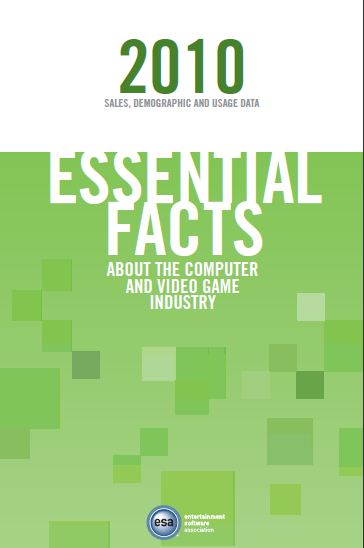
 The Entertainment Software Association, which represents the video game industry, has just released its latest " Essential Facts about the Computer and Video Game Industry" publication. It's a handy annual resource that I always look forward to reading. There are many interesting facts and figures found in the report, but here a few worth calling out from the data they have aggregated:
- 93% of the time parents are present at the time games are purchased or rented
- 64% of parents believe games are a positive part of their children's lives
- 86% of the time children receive their parents' permission before purchasing or renting a game
- 48% of parents play computer and video games with their children at least weekly
- 97% of parents report always or sometimes monitoring the games their children play
- 76% of parents believe that the parental controls available in all new video game consoles are useful
The survey also bolsters the findings of many other polls and reports which have found that parents employ a variety of what I have labeled "household media rules" to monitor or control their children's media consumption: Continue reading Latest Video Game "Essential Facts" Report . . .
posted by Adam Thierer @ 4:37 PM |
Free Speech, Online Safety & Parental Controls, Video Games & Virtual Worlds
Link to this Entry | Printer-Friendly | Email a Comment |Post a Comment (0)
Thursday, June 10,
2010
event notice: "Sending an Online Safety Message to Congress" (June 29th, 9am)
On June 29th, The Progress & Freedom Foundation (PFF) and the Family Online Safety Institute (FOSI) will co-host a National Press Club briefing entitled " Sending an Online Safety Message to Congress." This event will feature a discussion about the recently released report of the Online Safety and Technology Working Group (OSTWG), " Youth Safety on a Living Internet." OSTWG -- a congressionally-mandated blue ribbon working group -- analyzed the state of online child safety and offered policymakers and parents a wide array of recommendations for how to keep kids safe and secure in today's "always-on," interconnected world. [For more background on OSTWG and our final report, see this post.] Several OSTWG leaders will be on hand to discuss the report and outline the next steps that need to be taken on this front. Here are the details.
| What: |
Sending an Online Safety Message to Congress -- A discussion about the OSTWG final report and the future of childrens' online safety and public policy. |
| When: |
Tuesday, June 29
9:00 a.m. - 10:45 p.m. (breakfast provided) |
| Where: |
National Press Club
First Amendment Lounge, 13th Floor 529 14th Street NW Washington, D.C. 20515 |
| Who: |
Hemanshu Nigam, Founder, SSP Blue, and Co-Chair of OSTWG
Larry Magid, Co-Director, ConnectSafety.org
Michael McKeehan, Executive Director, Internet & Technology Policy, Verizon
Adam Thierer President, The Progress & Freedom Foundation
Stephen Balkam Chief Executive Officer, Family Online Safety Institute, (moderator) |
To Register: Space is limited, so an RSVP is required to attend. Please register here. posted by Adam Thierer @ 7:26 PM |
Events, Online Safety & Parental Controls
Link to this Entry | Printer-Friendly | Email a Comment |Post a Comment (1)
Monday, June 7,
2010
Kids, Media, Commercialism & Moral Panic
 I spend a lot of time here trying to debunk media "moral panics," "techno-panics," or unfounded hysteria over the impact of commercialism in general on kids. To believe what some politicians and regulatory agitators have to say, today's youth always seem at the precipice of the moral abyss. Our misguided youth are seemingly all going straight to hell and they dragging our culture and society down with them. I spend a lot of time here trying to debunk media "moral panics," "techno-panics," or unfounded hysteria over the impact of commercialism in general on kids. To believe what some politicians and regulatory agitators have to say, today's youth always seem at the precipice of the moral abyss. Our misguided youth are seemingly all going straight to hell and they dragging our culture and society down with them.
Except they're not. It's all the same old tripe we've heard one generation after another. As the late University of North Carolina journalism professor Margaret A. Blanchard once noted: "[P]arents and grandparents who lead the efforts to cleanse today's society seem to forget that they survived alleged attacks on their morals by different media when they were children. Each generation's adults either lose faith in the ability of their young people to do the same or they become convinced that the dangers facing the new generation are much more substantial than the ones they faced as children." And Thomas Hine, author of The Rise and Fall of the American Teenager, argues that: "We seem to have moved, without skipping a beat, from blaming our parents for the ills of society to blaming our children. We want them to embody virtues we only rarely practice. We want them to eschew habits we've never managed to break."
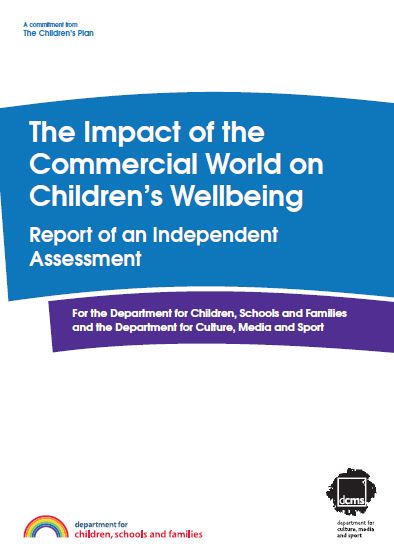
Anyway, I was reminded of this again today as I was finally reading through a report published last year by the U.K.'s Department for Children, Schools and Families and the Department for Culture, Media and Sport. It's entitled "The Impact of the Commercial World on Children's Wellbeing" and it is very much worth your attention. Several people had recommended I check it out in recent months, but I'm ashamed to say I am only now getting around to it as I prepare an amicus brief for the Supreme Court's review of a California video game law. But this U.K. report is not to be missed. Here are a few of the choice bits from the study: Continue reading Kids, Media, Commercialism & Moral Panic . . .
posted by Adam Thierer @ 10:32 AM |
Free Speech, Online Safety & Parental Controls
Link to this Entry | Printer-Friendly | Email a Comment |Post a Comment (2)
Friday, June 4,
2010
Online Safety and Technology Working Group (OSTWG) Final Report Released
The Online Safety and Technology Working Group (OSTWG) has just released its final report to Congress entitled, " Youth Safety on a Living Internet." As I mentioned here last year, this government task force was established by the "Protecting Children in the 21st Century Act," (part of the ''Broadband Data Improvement Act',' Pub. L. No. 110-385) and its mission was to review and evaluate:
- The status of industry efforts to promote online safety through educational efforts, parental control technology, blocking and filtering software, age-appropriate labels for content or other technologies or initiatives designed to promote a safe online environment for children;
- The status of industry efforts to promote online safety among providers of electronic communications services and remote computing services by reporting apparent child pornography, including any obstacles to such reporting;
- The practices of electronic communications service providers and remote computing service providers related to record retention in connection with crimes against children; and,
- The development of technologies to help parents shield their children from inappropriate material on the Internet.
The task force included over 30 experts from academia, industry, advocacy groups, and think tanks. It was my great honor to be a member of OSTWG and to serve as the chair of 1 of the 4 subcommittees. The four subcommittees addressed: data retention, child pornography reporting, educational efforts, and parental controls technologies. I chaired that last subcommittee on parental controls.
Our conclusions will not be surprising to those who have read previous online safety task force reports, which I have summarized in 2009 white paper, " Five Online Safety Task Forces Agree: Education, Empowerment & Self-Regulation Are the Answer." Generally speaking, we concluded that there is no silver-bullet technical solution to online child safety concerns. Instead - and again in agreement with previous research and task force reports - we have concluded that a diverse toolbox and a "layered approach" must be brought to bear on these problems and concerns. Here's how we put it in the report: Continue reading Online Safety and Technology Working Group (OSTWG) Final Report Released . . .
posted by Adam Thierer @ 4:14 PM |
Free Speech, Online Safety & Parental Controls
Link to this Entry | Printer-Friendly | Email a Comment |Post a Comment (19)
Thursday, June 3,
2010
What We Didn't Hear at Yesterday's FTC COPPA Workshop
Yesterday, the Federal Trade Commission (FTC) hosted an all-day workshop on "Protecting Kids' Privacy Online," which looked into the Children's Online Privacy Protection Act of 1998 (COPPA) and challenges posed to its enforcement by new technological developments. The FTC staff did a nice job bringing together and moderating 5 panels worth of participants, all of whom had plenty of interesting things to say about the future of COPPA. But I was more struck by what was not said yesterday. Namely, there was:
- ZERO explanation of the supposed harms of advertising, marketing, and data collection. Advertising-bashing is an old sport here in Washington, so I guess I should not have been surprised to hear several panelists yesterday engaging in teeth-gnashing and hand-wringing about advertising, marketing, and the data collection methods that make it possible. But this grousing just went on and on without any explanation by the critics of the supposed harms that would result from it.
- ZERO appreciation of the benefits of advertising, marketing, and data collection. Not once yesterday -- NOT ONCE -- did anyone pause to ask what it is that makes all these wonderful online sites, services and content free (or dirt cheap) to consumers. Everyone at this show was guilty of the "manna fallacy" (that all this stuff just falls magically to Earth from the Net Gods above). Well, back here in the real world, something has to pay for all those goodies, and that something is advertising and marketing, which are facilitated by data collection! Or would you like to pay $19.95 a month for each of those currently free sites and services? Yeah, I didn't think so.
Continue reading What We Didn't Hear at Yesterday's FTC COPPA Workshop . . .
posted by Adam Thierer @ 1:46 PM |
Advertising & Marketing, Free Speech, Online Safety & Parental Controls, Privacy
Link to this Entry | Printer-Friendly | Email a Comment |Post a Comment (3)
Wednesday, June 2,
2010
Follow-up on April Senate COPPA Hearing
On April 29, I testified before the Senate Commerce Committee's Consumer Protection Subcommittee on Examining Children's Privacy: New Technologies and the Children's Online Privacy Protection Act (COPPA). Today, I filed 23 pages of responses to questions for the Congressional Record from Subcommittee Chairman Mark Pryor (D-AR), touching on many of the concerns and issues Adam Thierer and I developed in our May 2009 paper, COPPA 2.0: The New Battle over Privacy, Age Verification, Online Safety & Free Speech.
At the April hearing, Senators asked whether COPPA could be improved. Today, as in my April oral and written testimony, I again urged lawmakers to "tread carefully" because COPPA, as implemented, basically works. I explained why COPPA's technological neutrality and flexibility should allow the FTC to keep pace with technological convergence and change without the need for legislative changes. But expanding the statute beyond its limited purposes, especially to cover adolescents under 18, could raise serious constitutional questions about the First Amendment rights of adults as well as older teens and site and service operators, and also have unintended consequences for the health of online content and services without necessarily significantly increasing the online privacy and safety of children.
The Committee's follow-up questions also inquired about COPPA's implementation, the subject of today's FTC Roundtable. I noted that COPPA implementation has gone reasonably well, meeting its primary goal of enhancing parental involvement in children's online activities, but that implementation has come at a price, since the costs of obtaining verifiable parental consent and otherwise complying with COPPA have, on the one hand, discouraged site and service operators from allowing children on their sites or offering child-oriented content, and, on the other hand, raised costs for child-oriented sites. The FTC could do more to lower compliance costs for website operators, thus allowing achievement of COPPA's goals at a lower cost for parents and kids in foregone content and services.
Finally, I raised concerns about the FTC's seeming invitation for changes to the COPPA statute itself. As a general matter, regulatory agencies should not be in the business of re-assessing the adequacy of their own powers, since the natural impulse of all bureaucracy is to grow. Though the agency has done a yeoman's job of implementing COPPA, ultimately it is the responsibility of Congress, not the FTC, to make decisions about modifying the statute. Continue reading Follow-up on April Senate COPPA Hearing . . .
posted by Berin Szoka @ 10:53 PM |
Online Safety & Parental Controls, Privacy
Link to this Entry | Printer-Friendly | Email a Comment |Post a Comment (0)
Thursday, April 29,
2010
PFF TechCast #4: Senate Testimony on the Children's Online Privacy Protection Act (COPPA)
posted by Berin Szoka @ 10:18 AM |
Advertising & Marketing, Free Speech, Online Safety & Parental Controls, PFF Podcasts, Privacy
Link to this Entry | Printer-Friendly | Email a Comment |Post a Comment (8)
Saturday, March 27,
2010
Eric Goldman on New Threats to Sec. 230
posted by Adam Thierer @ 1:42 PM |
Intermediary Deputization & Section 230, Online Safety & Parental Controls, Philosophy / Cyber-Libertarianism
Link to this Entry | Printer-Friendly | Email a Comment |Post a Comment (3)
Wednesday, March 24,
2010
FTC Announces Broad COPPA Review for Children's Online Privacy
posted by Berin Szoka @ 10:24 PM |
Advertising & Marketing, Online Safety & Parental Controls, Privacy
Link to this Entry | Printer-Friendly | Email a Comment |Post a Comment (0)
Sunday, March 21,
2010
David Burt's Amazing Guide to Parental Controls Technologies
posted by Adam Thierer @ 9:53 PM |
Online Safety & Parental Controls
Link to this Entry | Printer-Friendly | Email a Comment |Post a Comment (0)
Wednesday, February 24,
2010
PFF & EFF File Joint Comments in FCC's "Empowering Parents & Protecting Children" NOI
posted by Adam Thierer @ 3:49 PM |
Advertising & Marketing, Free Speech, Online Safety & Parental Controls
Link to this Entry | Printer-Friendly | Email a Comment |Post a Comment (1)
Wednesday, February 10,
2010
Digital Citizenship, Media Literacy & Child Safety
posted by Adam Thierer @ 12:25 AM |
Free Speech, Online Safety & Parental Controls
Link to this Entry | Printer-Friendly | Email a Comment |Post a Comment (3)
Thursday, January 14,
2010
Robotic Prostitution, Parental Controls, Caprica & Sex in the Uncanny Valley
posted by Berin Szoka @ 10:06 AM |
Online Safety & Parental Controls, Video Games & Virtual Worlds
Link to this Entry | Printer-Friendly | Email a Comment |Post a Comment (3)
Monday, January 11,
2010
Virtual World Safety: Some Good Parenting Tips
posted by Adam Thierer @ 12:22 PM |
Online Safety & Parental Controls
Link to this Entry | Printer-Friendly | Email a Comment |Post a Comment (1)
Wednesday, December 2,
2009
Bob Barr Denounces Cyberbullying Criminalization
posted by Berin Szoka @ 10:20 PM |
Free Speech, Online Safety & Parental Controls
Link to this Entry | Printer-Friendly | Email a Comment |Post a Comment (0)
Saturday, November 28,
2009
The "Problem of Proportionality" in Debates about Online Privacy and Child Safety
posted by Adam Thierer @ 1:45 PM |
Free Speech, Generic Rant, Online Safety & Parental Controls, Privacy
Link to this Entry | Printer-Friendly | Email a Comment |Post a Comment (4)
Wednesday, November 25,
2009
Is There Really Any Shortage of Good Programming Options for Kids?
posted by Adam Thierer @ 1:12 PM |
Mass Media, Online Safety & Parental Controls
Link to this Entry | Printer-Friendly | Email a Comment |Post a Comment (0)
Thursday, October 29,
2009
Does TV Cause Violence Against Women? PTC's "Women in Peril" Report
posted by Adam Thierer @ 1:00 AM |
Free Speech, Online Safety & Parental Controls
Link to this Entry | Printer-Friendly | Email a Comment |
Sunday, October 25,
2009
FCC's New Notice on "Empowering Parents and Protecting Children in an Evolving Media Landscape"
posted by Adam Thierer @ 11:57 PM |
Free Speech, Online Safety & Parental Controls
Link to this Entry | Printer-Friendly | Email a Comment |
Tuesday, September 29,
2009
Heading to Oxford Univ. for Forum on "Child Protection, Free Speech and the Internet"
posted by Adam Thierer @ 10:06 AM |
Free Speech, Online Safety & Parental Controls
Link to this Entry | Printer-Friendly | Email a Comment |
Saturday, September 26,
2009
Recap of PFF Hill Event on "Next-Generation Parental Controls & Child Safety Efforts"
posted by Adam Thierer @ 2:25 PM |
Online Safety & Parental Controls
Link to this Entry | Printer-Friendly | Email a Comment |
Friday, September 18,
2009
Skype, Child Safety & the Worse Case Scenario Mentality
posted by Adam Thierer @ 12:24 AM |
Online Safety & Parental Controls
Link to this Entry | Printer-Friendly | Email a Comment |
Tuesday, September 15,
2009
The Irony of Mandatory Filtering in China vs. the U.S.
posted by Adam Thierer @ 4:37 PM |
China, Free Speech, Online Safety & Parental Controls
Link to this Entry | Printer-Friendly | Email a Comment |
Monday, September 14,
2009
List of Recent of State Cyberbullying Measures
posted by Adam Thierer @ 9:54 PM |
Free Speech, Online Safety & Parental Controls
Link to this Entry | Printer-Friendly | Email a Comment |
Wednesday, September 9,
2009
Is There a Relationship Between Online Safety Concerns and Broadband Uptake?
posted by Adam Thierer @ 8:43 PM |
Broadband, Online Safety & Parental Controls
Link to this Entry | Printer-Friendly | Email a Comment |
Tuesday, August 25,
2009
Collier & Magid's "Online Safety 3.0": A Refreshing Approach to Internet Safety
posted by Adam Thierer @ 11:07 PM |
Free Speech, Online Safety & Parental Controls
Link to this Entry | Printer-Friendly | Email a Comment |
LA Times on the "Overreaction to Online Harassment"
posted by Adam Thierer @ 9:37 PM |
Free Speech, Online Safety & Parental Controls
Link to this Entry | Printer-Friendly | Email a Comment |
Thursday, August 20,
2009
Good Advice for Parents & Kids about Online Privacy & Reputation
posted by Adam Thierer @ 11:43 AM |
Online Safety & Parental Controls
Link to this Entry | Printer-Friendly | Email a Comment |
Tuesday, August 18,
2009
Transcript of 7/27 PFF Event on Child Safety, Privacy, and Free Speech
posted by Adam Thierer @ 1:49 PM |
Events, Free Speech, Online Safety & Parental Controls, PFF Podcasts
Link to this Entry | Printer-Friendly | Email a Comment |
Wednesday, August 12,
2009
If NCMEC's Going to Regulate the Internet for Child Porn, It Should At Least Be Subject to FOIA
posted by Berin Szoka @ 11:44 AM |
Free Speech, Online Safety & Parental Controls
Link to this Entry | Printer-Friendly | Email a Comment |
Thursday, July 30,
2009
Maine's COPPA 2.0 Law Actually an Indirect Age Verification Mandate
posted by Berin Szoka @ 9:45 AM |
Add category, Advertising & Marketing, Free Speech, Online Safety & Parental Controls
Link to this Entry | Printer-Friendly | Email a Comment |
Monday, July 27,
2009
"Parental Controls & Online Child Protection" PFF special report (Version 4.0 Release)
posted by Adam Thierer @ 10:05 AM |
Free Speech, Online Safety & Parental Controls
Link to this Entry | Printer-Friendly | Email a Comment |
Thursday, July 23,
2009
We Are Living in the Golden Age of Children's Programming
posted by Adam Thierer @ 2:33 PM |
Free Speech, Mass Media, Online Safety & Parental Controls
Link to this Entry | Printer-Friendly | Email a Comment |
Thursday, July 16,
2009
Australian Government Survey on Parents' Ease of Managing Media Use
posted by Adam Thierer @ 11:24 AM |
Free Speech, Online Safety & Parental Controls
Link to this Entry | Printer-Friendly | Email a Comment |
Wednesday, July 15,
2009
Against Techno-Panics
posted by Adam Thierer @ 11:16 PM |
Free Speech, Online Safety & Parental Controls
Link to this Entry | Printer-Friendly | Email a Comment |
Magid on How to Address Cyberbullying
posted by Adam Thierer @ 10:23 PM |
Online Safety & Parental Controls
Link to this Entry | Printer-Friendly | Email a Comment |
Monday, July 13,
2009
Upcoming July 27th Event on Online Safety, Privacy & Free Speech
posted by Adam Thierer @ 11:31 AM |
Events, Free Speech, Online Safety & Parental Controls, Privacy
Link to this Entry | Printer-Friendly | Email a Comment |
Tennessee Enacts Flawed Cyberharassment Law
posted by Berin Szoka @ 10:38 AM |
Free Speech, Online Safety & Parental Controls
Link to this Entry | Printer-Friendly | Email a Comment |
Wednesday, July 8,
2009
Five Online Safety Task Forces Have Generally Agreed
posted by Adam Thierer @ 12:08 PM |
Free Speech, Online Safety & Parental Controls
Link to this Entry | Printer-Friendly | Email a Comment |
"PointSmart. ClickSafe." Online Safety Task Force Report Released
posted by Adam Thierer @ 9:35 AM |
Free Speech, Online Safety & Parental Controls
Link to this Entry | Printer-Friendly | Email a Comment |
Wednesday, July 1,
2009
Cyberbullying Legislation Debate: Video from FOSI Capitol Hill Event (6/12)
posted by Adam Thierer @ 2:28 PM |
Free Speech, Online Safety & Parental Controls
Link to this Entry | Printer-Friendly | Email a Comment |
Friday, June 19,
2009
Cyberbullying Legislation: Why Education is Preferable to Regulation
posted by Adam Thierer @ 11:21 AM |
Free Speech, Online Safety & Parental Controls
Link to this Entry | Printer-Friendly | Email a Comment |
Wednesday, June 17,
2009
China's Green Dam Filter and the Threat of Rising Global Censorship
posted by Adam Thierer @ 3:49 PM |
Free Speech, Online Safety & Parental Controls
Link to this Entry | Printer-Friendly | Email a Comment |
Friday, June 5,
2009
Free-Range Kids by Lenore Skenazy: Bringing Some Sanity Back to Parenting Debates
posted by Adam Thierer @ 2:24 PM |
Online Safety & Parental Controls
Link to this Entry | Printer-Friendly | Email a Comment |
Thursday, June 4,
2009
Online Safety Technology Working Group (OSTWG) Is Underway
posted by Adam Thierer @ 10:44 PM |
Online Safety & Parental Controls
Link to this Entry | Printer-Friendly | Email a Comment |
Monday, June 1,
2009
Thomas Sowell on the Model that Drives Elitist Ideological Crusades
posted by Adam Thierer @ 2:15 PM |
Books & Book Reviews, Free Speech, Generic Rant, Online Safety & Parental Controls, Privacy
Link to this Entry | Printer-Friendly | Email a Comment |
Sunday, May 31,
2009
Free Speech Implications of COPPA Expansion
posted by Adam Thierer @ 11:22 PM |
Free Speech, Online Safety & Parental Controls
Link to this Entry | Printer-Friendly | Email a Comment |
Wednesday, May 20,
2009
Reply Comments in FCC's "Child Safe Viewing Act" Notice of Inquiry
posted by Adam Thierer @ 3:00 PM |
Free Speech, Online Safety & Parental Controls
Link to this Entry | Printer-Friendly | Email a Comment |
Tuesday, April 28,
2009
NTIA names Online Safety Technical Working Group members
posted by Adam Thierer @ 7:07 PM |
Free Speech, Online Safety & Parental Controls
Link to this Entry | Printer-Friendly | Email a Comment |
Thursday, April 23,
2009
Collier on "Why Technopanics are Bad"
posted by Adam Thierer @ 11:12 PM |
Free Speech, Online Safety & Parental Controls
Link to this Entry | Printer-Friendly | Email a Comment |
Monday, April 20,
2009
Major Filings in FCC's "Child Safe Viewing Act" Notice of Inquiry
posted by Adam Thierer @ 11:41 AM |
Free Speech, Online Safety & Parental Controls
Link to this Entry | Printer-Friendly | Email a Comment |
Wednesday, April 15,
2009
Comments in FCC "Child Safe Viewing Act" Proceeding
posted by Adam Thierer @ 10:51 PM |
Free Speech, Online Safety & Parental Controls
Link to this Entry | Printer-Friendly | Email a Comment |
Friday, March 6,
2009
The Future of Sec. 230 and Online Immunity: My Debate with Harvard's John Palfrey
posted by Adam Thierer @ 12:41 PM |
Free Speech, Internet, Online Safety & Parental Controls
Link to this Entry | Printer-Friendly | Email a Comment |
Privacy Solutions Series: Part 3 - Internet Explorer Privacy Features
posted by Adam Marcus @ 9:50 AM |
Internet, Ongoing Series, Online Safety & Parental Controls, Privacy, Privacy Solutions, Software
Link to this Entry | Printer-Friendly | Email a Comment |
Tuesday, March 3,
2009
Dawn of Convergence-Era Content Regulation at the FCC? "Child Safe Viewing Act" NOI Launched
posted by Adam Thierer @ 10:44 PM |
Free Speech, Online Safety & Parental Controls
Link to this Entry | Printer-Friendly | Email a Comment |
Sunday, March 1,
2009
Another Reminder Why Age Verification Mandates Would Be a Bad Idea
posted by Adam Thierer @ 11:08 PM |
Free Speech, Online Safety & Parental Controls, Privacy
Link to this Entry | Printer-Friendly | Email a Comment |
Friday, February 27,
2009
New PFF Study: "Who Needs Parental Controls?"
posted by Adam Thierer @ 11:05 AM |
Free Speech, Online Safety & Parental Controls
Link to this Entry | Printer-Friendly | Email a Comment |
Monday, February 2,
2009
Nancy Willard Puts Social Networking Risks in Context
posted by Adam Thierer @ 11:34 PM |
Free Speech, Online Safety & Parental Controls
Link to this Entry | Printer-Friendly | Email a Comment |
Tuesday, January 27,
2009
Some Great Podcasts about Online Safety & the ISTTF
posted by Adam Thierer @ 6:29 PM |
Free Speech, Online Safety & Parental Controls
Link to this Entry | Printer-Friendly | Email a Comment |
Tuesday, January 13,
2009
Internet Safety Technical Task Force releases final report
posted by Adam Thierer @ 11:13 PM |
Free Speech, Online Safety & Parental Controls
Link to this Entry | Printer-Friendly | Email a Comment |
Monday, December 15,
2008
2008 FOSI Conference & Awards
posted by Adam Thierer @ 8:31 PM |
Online Safety & Parental Controls
Link to this Entry | Printer-Friendly | Email a Comment |
Thursday, December 4,
2008
My debate with USA Today about new study on media & kids
posted by Adam Thierer @ 9:59 AM |
Free Speech, Online Safety & Parental Controls
Link to this Entry | Printer-Friendly | Email a Comment |
Tuesday, December 2,
2008
"Child Safe Viewing Act" (S. 602) signed by President Bush
posted by Adam Thierer @ 9:02 PM |
Free Speech, Online Safety & Parental Controls
Link to this Entry | Printer-Friendly | Email a Comment |
Thursday, November 20,
2008
Putting Youth Social Networking Activities and Safety in Perspective
posted by Adam Thierer @ 10:52 AM |
Free Speech, Online Safety & Parental Controls
Link to this Entry | Printer-Friendly | Email a Comment |
Saturday, November 15,
2008
NYT Article on Age Verification & Schools
posted by Adam Thierer @ 3:59 PM |
Free Speech, Online Safety & Parental Controls
Link to this Entry | Printer-Friendly | Email a Comment |
Sunday, November 2,
2008
What's More Dangerous: The Internet or Drunk Drivers?
posted by Adam Thierer @ 4:11 PM |
Free Speech, Online Safety & Parental Controls
Link to this Entry | Printer-Friendly | Email a Comment |
Wednesday, October 29,
2008
Video Game Censorship Heading to Supreme Court?
posted by Adam Thierer @ 11:09 PM |
Free Speech, Online Safety & Parental Controls
Link to this Entry | Printer-Friendly | Email a Comment |
Friday, October 10,
2008
book review: Palfrey & Gasser's "Born Digital"
posted by Adam Thierer @ 4:23 PM |
Books & Book Reviews, Free Speech, Generic Rant, Online Safety & Parental Controls, Privacy
Link to this Entry | Printer-Friendly | Email a Comment |
Thursday, October 2,
2008
Senate passes "Child Safe Viewing Act" (S. 602)
posted by Adam Thierer @ 11:19 AM |
Free Speech, Online Safety & Parental Controls
Link to this Entry | Printer-Friendly | Email a Comment |
Thursday, September 25,
2008
Age Verification Debate Continues; Schools Now at Center of Discussion
posted by Adam Thierer @ 2:07 PM |
Free Speech, Online Safety & Parental Controls, Privacy
Link to this Entry | Printer-Friendly | Email a Comment |
Tuesday, September 16,
2008
Version 3.1 release: "Parental Controls & Online Child Protection"
posted by Adam Thierer @ 7:08 PM |
Free Speech, Online Safety & Parental Controls
Link to this Entry | Printer-Friendly | Email a Comment |
Thursday, August 28,
2008
Safe Search Tools & Portals for Kids - The List Keeps Growing
posted by Adam Thierer @ 12:49 PM |
Online Safety & Parental Controls
Link to this Entry | Printer-Friendly | Email a Comment |
Tuesday, August 12,
2008
Get Ready for Internet Advertising Regulation "for the Children"
posted by Adam Thierer @ 10:25 AM |
Free Speech, Online Safety & Parental Controls
Link to this Entry | Printer-Friendly | Email a Comment |
Friday, August 8,
2008
CDT-PFF Supreme Court Brief in FCC v. Fox Case
posted by Adam Thierer @ 10:19 AM |
Free Speech, Online Safety & Parental Controls
Link to this Entry | Printer-Friendly | Email a Comment |
Tuesday, August 5,
2008
True Cost of Video Game Censorship (continued)
posted by Adam Thierer @ 3:45 PM |
Free Speech, Online Safety & Parental Controls
Link to this Entry | Printer-Friendly | Email a Comment |
Tuesday, July 29,
2008
Joint FCC Filing on Internet Filtering Plan for AWS-3 Spectrum
posted by Adam Thierer @ 11:20 AM |
Free Speech, Online Safety & Parental Controls, Spectrum
Link to this Entry | Printer-Friendly | Email a Comment |
Tuesday, July 22,
2008
"Scientific" Media Ratings & Labels: What Exactly Does That Mean?
posted by Adam Thierer @ 5:49 PM |
Free Speech, Online Safety & Parental Controls
Link to this Entry | Printer-Friendly | Email a Comment |
2008 edition of "Essential Facts about Video Games" is out
posted by Adam Thierer @ 8:54 AM |
Free Speech, Online Safety & Parental Controls
Link to this Entry | Printer-Friendly | Email a Comment |
Thursday, July 17,
2008
Dear Gov. Patterson... Regarding that Video Game Bill You Are About to Sign
posted by Adam Thierer @ 10:44 AM |
Free Speech, Online Safety & Parental Controls
Link to this Entry | Printer-Friendly | Email a Comment |
Saturday, July 12,
2008
The Next Great Technopanic: Wireless Geo-Location / Social Mapping
posted by Adam Thierer @ 5:46 PM |
Free Speech, Online Safety & Parental Controls, Wireless
Link to this Entry | Printer-Friendly | Email a Comment |
Thursday, July 10,
2008
Technopanics and the Great Social Networking Scare
posted by Adam Thierer @ 3:07 PM |
Books & Book Reviews, Free Speech, Online Safety & Parental Controls
Link to this Entry | Printer-Friendly | Email a Comment |
Tuesday, July 1,
2008
Pacifica Anniversary Week, Part 4 (Pervasiveness is Moot)
posted by Adam Thierer @ 12:08 PM |
Free Speech, Online Safety & Parental Controls
Link to this Entry | Printer-Friendly | Email a Comment |
Understanding The True Cost of Video Game Censorship Efforts
posted by Adam Thierer @ 11:51 AM |
Free Speech, Online Safety & Parental Controls
Link to this Entry | Printer-Friendly | Email a Comment |
Friday, June 6,
2008
What's Worse Than Rigged Auctions & Internet Censorship? How About Both in One Package!
posted by Adam Thierer @ 6:05 PM |
Broadband, Free Speech, Online Safety & Parental Controls, Spectrum
Link to this Entry | Printer-Friendly | Email a Comment |
Thursday, May 15,
2008
Forbes on "Making Social [Networking] Sites Safer"
posted by Adam Thierer @ 10:13 AM |
Free Speech, Online Safety & Parental Controls
Link to this Entry | Printer-Friendly | Email a Comment |
Monday, May 12,
2008
Will they age-verify the Pope?
posted by Adam Thierer @ 10:19 AM |
Free Speech, Online Safety & Parental Controls
Link to this Entry | Printer-Friendly | Email a Comment |
Thursday, May 8,
2008
latest FTC "secret shopper" survey shows improving ratings enforcement
posted by Adam Thierer @ 2:10 PM |
Free Speech, Online Safety & Parental Controls
Link to this Entry | Printer-Friendly | Email a Comment |
Monday, May 5,
2008
Virginia points the way on Internet safety
posted by Adam Thierer @ 10:26 AM |
Free Speech, Online Safety & Parental Controls
Link to this Entry | Printer-Friendly | Email a Comment |
Sunday, May 4,
2008
Obama on Grand Theft Auto and personal responsibility
posted by Adam Thierer @ 9:59 PM |
Free Speech, Online Safety & Parental Controls
Link to this Entry | Printer-Friendly | Email a Comment |
Wednesday, April 23,
2008
review: Dr. Kourosh Dini's "Video Game Play & Addiction"
posted by Adam Thierer @ 8:23 PM |
Books & Book Reviews, Free Speech, Online Safety & Parental Controls
Link to this Entry | Printer-Friendly | Email a Comment |
Students, Cyber-Bullying, & Online Free Speech
posted by Adam Thierer @ 11:21 AM |
Free Speech, Online Safety & Parental Controls
Link to this Entry | Printer-Friendly | Email a Comment |
Monday, April 14,
2008
review: Kutner & Olson's "Grand Theft Childhood"
posted by Adam Thierer @ 2:42 PM |
Books & Book Reviews, Free Speech, Online Safety & Parental Controls
Link to this Entry | Printer-Friendly | Email a Comment |
Thursday, March 27,
2008
Byron Commission (UK) report - initial thoughts
posted by Adam Thierer @ 11:57 AM |
Free Speech, Online Safety & Parental Controls
Link to this Entry | Printer-Friendly | Email a Comment |
Wednesday, March 26,
2008
Google's excellent new online safety campaign
posted by Adam Thierer @ 10:13 AM |
Free Speech, Online Safety & Parental Controls
Link to this Entry | Printer-Friendly | Email a Comment |
"Parental Controls and Online Child Protection" - Version 3.0 release
posted by Adam Thierer @ 1:56 AM |
Free Speech, Online Safety & Parental Controls
Link to this Entry | Printer-Friendly | Email a Comment |
Friday, March 7,
2008
Young kids and rational messaging about online safety
posted by Adam Thierer @ 12:41 PM |
Online Safety & Parental Controls
Link to this Entry | Printer-Friendly | Email a Comment |
Friday, February 29,
2008
Putting online dangers in perspective
posted by Adam Thierer @ 3:43 PM |
Free Speech, Online Safety & Parental Controls
Link to this Entry | Printer-Friendly | Email a Comment |
Australian government online safety report
posted by Adam Thierer @ 1:28 PM |
Free Speech, Online Safety & Parental Controls
Link to this Entry | Printer-Friendly | Email a Comment |
Kids and Media
posted by Amy Smorodin @ 10:29 AM |
Free Speech, Mass Media, Online Safety & Parental Controls
Link to this Entry | Printer-Friendly | Email a Comment |
Thursday, February 28,
2008
new Internet Safety Technical Task Force
posted by Adam Thierer @ 8:40 AM |
Free Speech, Online Safety & Parental Controls
Link to this Entry | Printer-Friendly | Email a Comment |
Wednesday, February 27,
2008
Mobile phone censorship regime coming?
posted by Adam Thierer @ 2:02 PM |
Free Speech, Online Safety & Parental Controls
Link to this Entry | Printer-Friendly | Email a Comment |
Tuesday, February 26,
2008
Are All Video Games Violent?
posted by Adam Thierer @ 2:48 PM |
Free Speech, Online Safety & Parental Controls
Link to this Entry | Printer-Friendly | Email a Comment |
Wednesday, February 20,
2008
Scalia on video game regulation
posted by Adam Thierer @ 8:46 AM |
Free Speech, Online Safety & Parental Controls
Link to this Entry | Printer-Friendly | Email a Comment |
Friday, February 15,
2008
Leading pornographer lecturing Google & Yahoo about cleaning up online porn
posted by Adam Thierer @ 2:59 PM |
Free Speech, Online Safety & Parental Controls
Link to this Entry | Printer-Friendly | Email a Comment |
Wednesday, February 13,
2008
UK's "Unique Learner Number"
posted by Adam Thierer @ 3:14 PM |
Online Safety & Parental Controls, Privacy
Link to this Entry | Printer-Friendly | Email a Comment |
Wednesday, February 6,
2008
new PFF-CDT index of free speech / content bills
posted by Adam Thierer @ 10:40 AM |
Free Speech, Online Safety & Parental Controls
Link to this Entry | Printer-Friendly | Email a Comment |
Wednesday, January 23,
2008
USA Today, age verification, and the death of online anonymity
posted by Adam Thierer @ 8:07 PM |
Free Speech, Online Safety & Parental Controls
Link to this Entry | Printer-Friendly | Email a Comment |
Monday, January 14,
2008
Today’s MySpace-AG Agreement
posted by Adam Thierer @ 9:41 PM |
Free Speech, Online Safety & Parental Controls, Privacy
Link to this Entry | Printer-Friendly | Email a Comment |
Friday, January 11,
2008
FOSI's "State of Online Safety Report 2008"
posted by Adam Thierer @ 11:00 AM |
Free Speech, Online Safety & Parental Controls
Link to this Entry | Printer-Friendly | Email a Comment |
Friday, December 14,
2007
Latest Census Numbers on Kids, Parents & Media
posted by Adam Thierer @ 1:27 PM |
Free Speech, Online Safety & Parental Controls
Link to this Entry | Printer-Friendly | Email a Comment |
Sunday, October 21,
2007
FT on age verification for social networking
posted by Adam Thierer @ 9:31 AM |
Free Speech, Online Safety & Parental Controls
Link to this Entry | Printer-Friendly | Email a Comment |
Thursday, October 11,
2007
Parental Control Perfection
posted by Adam Thierer @ 4:42 PM |
Free Speech, Online Safety & Parental Controls
Link to this Entry | Printer-Friendly | Email a Comment |
Thursday, October 4,
2007
Cyber-Safety in a Web 2.0 World
posted by Amy Smorodin @ 12:39 PM |
Events, Internet, Online Safety & Parental Controls
Link to this Entry | Printer-Friendly | Email a Comment |
Thursday, September 27,
2007
New Online Safety Bills
posted by Adam Thierer @ 7:53 PM |
Free Speech, Online Safety & Parental Controls
Link to this Entry | Printer-Friendly | Email a Comment |
Friday, September 7,
2007
Who Killed TV's "Family Hour"?
posted by Adam Thierer @ 2:30 PM |
Free Speech, Mass Media, Online Safety & Parental Controls
Link to this Entry | Printer-Friendly | Email a Comment |
Tuesday, September 4,
2007
New Mobile Parental Controls
posted by Adam Thierer @ 7:32 PM |
Free Speech, Online Safety & Parental Controls
Link to this Entry | Printer-Friendly | Email a Comment |
Tuesday, August 7,
2007
First Amendment & Video Games [Updated] Score: Gamers 11, Censors 0
posted by Adam Thierer @ 3:35 PM |
Free Speech, Online Safety & Parental Controls
Link to this Entry | Printer-Friendly | Email a Comment |
Thursday, July 26,
2007
Version 2.2 of PFF book on "Parental Controls & Online Child Protection"
posted by Adam Thierer @ 3:19 PM |
Free Speech, Online Safety & Parental Controls
Link to this Entry | Printer-Friendly | Email a Comment |
Monday, July 2,
2007
"Child Safety" -- 100 Years Ago vs. Today
posted by Adam Thierer @ 9:30 PM |
Free Speech, Generic Rant, Online Safety & Parental Controls
Link to this Entry | Printer-Friendly | Email a Comment |
Sunday, July 1,
2007
Summary of 10-Part Series on "National Internet Safety Month"
posted by Adam Thierer @ 9:54 PM |
Free Speech, Online Safety & Parental Controls
Link to this Entry | Printer-Friendly | Email a Comment |
Saturday, June 30,
2007
Internet Safety Month, Part 10: Good Parenting Means Everything!
posted by Adam Thierer @ 4:30 PM |
Free Speech, Online Safety & Parental Controls
Link to this Entry | Printer-Friendly | Email a Comment |
Tuesday, June 26,
2007
Sen. Rockefeller Gives Up on Parenting at Senate Violence Hearing
posted by Adam Thierer @ 7:46 PM |
Free Speech, Online Safety & Parental Controls
Link to this Entry | Printer-Friendly | Email a Comment |
Monday, June 25,
2007
New Polls Suggest Radical Theory: Parents are Parenting!
posted by Adam Thierer @ 7:03 PM |
Free Speech, Online Safety & Parental Controls
Link to this Entry | Printer-Friendly | Email a Comment |
Sunday, June 24,
2007
Internet Safety Month, Part 9: Online Safety and Law Enforcement Efforts
posted by Adam Thierer @ 11:27 AM |
Free Speech, Online Safety & Parental Controls
Link to this Entry | Printer-Friendly | Email a Comment |
Friday, June 22,
2007
testimony at House hearing on "The Images Kids See on the Screen"
posted by Adam Thierer @ 8:35 AM |
Free Speech, Online Safety & Parental Controls
Link to this Entry | Printer-Friendly | Email a Comment |
Wednesday, June 20,
2007
new book on Parental Controls & Online Child Protection
posted by Adam Thierer @ 1:50 PM |
Free Speech, Online Safety & Parental Controls
Link to this Entry | Printer-Friendly | Email a Comment |
Sunday, June 17,
2007
Internet Safety Month, Part 8: Social Networking Safety
posted by Adam Thierer @ 1:31 PM |
Free Speech, Online Safety & Parental Controls
Link to this Entry | Printer-Friendly | Email a Comment |
Tuesday, June 12,
2007
Internet Safety Month, Part 7: The Importance of Online Safety Education
posted by Adam Thierer @ 10:40 AM |
Free Speech, Online Safety & Parental Controls
Link to this Entry | Printer-Friendly | Email a Comment |
Thursday, June 7,
2007
Internet Safety Month, Part 6: A Voluntary Code of Conduct for Online Safety
posted by Adam Thierer @ 10:40 AM |
Free Speech, Online Safety & Parental Controls
Link to this Entry | Printer-Friendly | Email a Comment |
Tuesday, June 5,
2007
Internet Safety Month, Part 5: Search Engine Filters and Portals for Kids
posted by Adam Thierer @ 9:34 AM |
Free Speech, Online Safety & Parental Controls
Link to this Entry | Printer-Friendly | Email a Comment |
Monday, June 4,
2007
Internet Safety Month, Part 4: Website Labeling and Metadata Tagging
posted by Adam Thierer @ 10:40 AM |
Free Speech, Online Safety & Parental Controls
Link to this Entry | Printer-Friendly | Email a Comment |
Internet Safety Month, Part 3: Operating Systems and Web Browser Controls
posted by Adam Thierer @ 8:01 AM |
Free Speech, Online Safety & Parental Controls
Link to this Entry | Printer-Friendly | Email a Comment |
Sunday, June 3,
2007
Internet Safety Month, Part 2: Internet Filters & Monitoring Tools
posted by Adam Thierer @ 2:37 PM |
Online Safety & Parental Controls
Link to this Entry | Printer-Friendly | Email a Comment |
Internet Safety Month, Part 1: Online Safety Metasites
posted by Adam Thierer @ 10:52 AM |
Free Speech, General, Online Safety & Parental Controls
Link to this Entry | Printer-Friendly | Email a Comment |
|